Fate, Texas · Hail and storm damage
Hail and storm damage roof repair in Fate, TX
Hail fell on Fate on April 27, 2026, and on June 11, 2023 before that. If you are wondering whether your roof took it, or whether the trucks working your street are telling you something real, the place to start is what was actually reported near your address and what that size of hail does to a shingle.
The NOAA record for Fate, what genuine hail damage looks like next to what only resembles it, and the Texas rules that govern your claim.
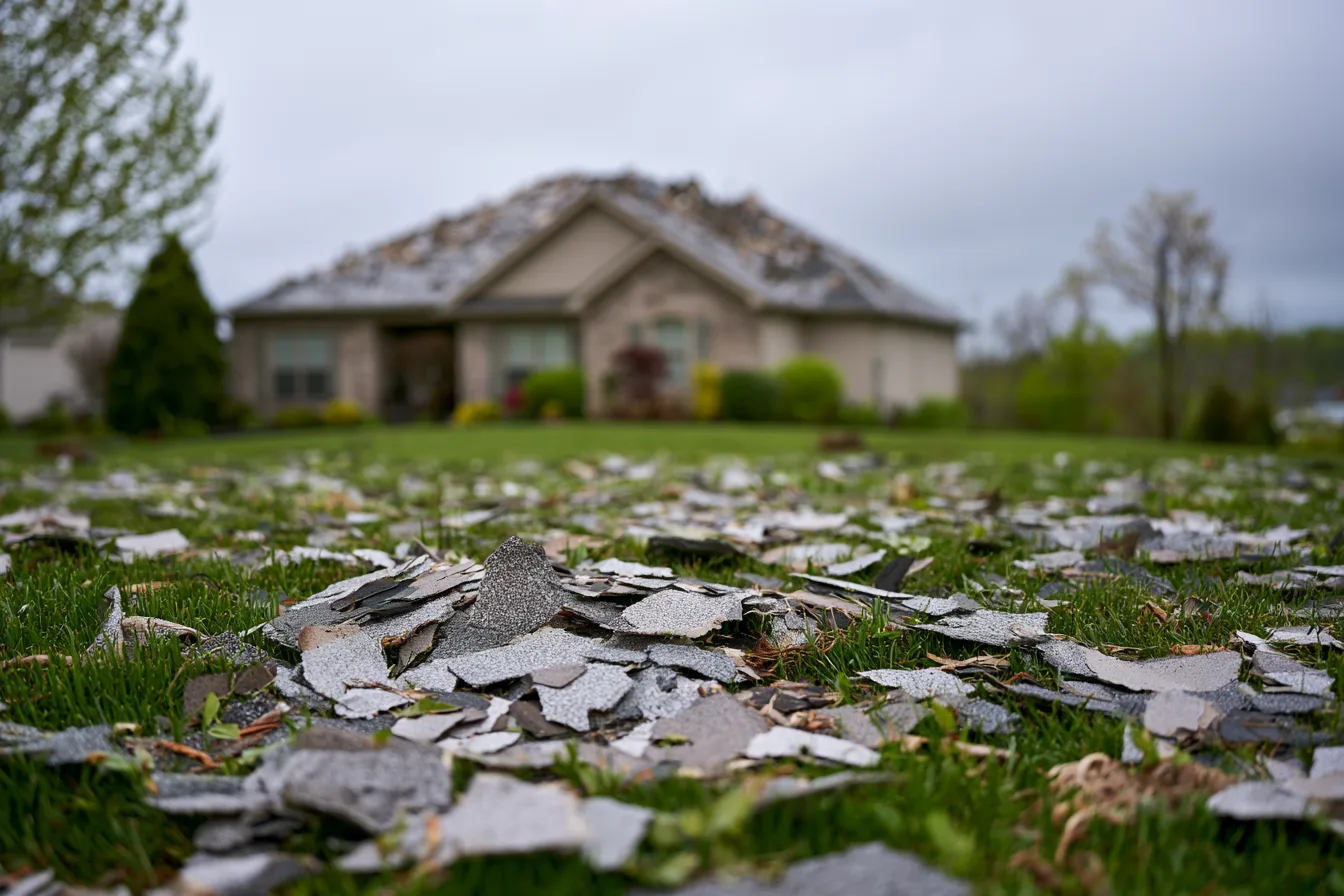
After the hail
Storm damage help for Fate roofs
After a hail night in Fate the doorbells start, and they all say the same sentence. Some of those roofs genuinely need replacing. Some do not, and their owners find out later, after a claim that goes nowhere or a roof they never needed.
What settles it is what is on your roof, not what is on your street. Hail falls unevenly over a few hundred feet, and two houses across from each other can come out of one storm completely differently. The sequence that works: find out what fell near you, learn what real damage looks like, get somebody on the roof who will photograph it either way, then decide about a claim.
That is the order this page follows.

What hail actually did in Fate
These are the largest hail reports NOAA holds within about five miles of central Fate for the two dates that matter most here. They are reported event start points logged by spotters, the public and social media, not a map of which roofs were damaged. A report a mile away does not prove your roof was hit, and a quiet record does not prove it came through fine. Every record for the area, with links to the NOAA entries, sits in the full Fate storm history.
| Date | Reported location | Hail size | Distance from central Fate |
|---|---|---|---|
| April 27, 2026 | Fate | 2.75 inches | 0.8 miles |
| April 27, 2026 | Blackland | 2 inches | 1.6 miles |
| April 27, 2026 | Rockwall | 1.75 inches | 5 miles |
| April 27, 2026 | Fate | 1.5 inches | 0.1 miles |
| June 11, 2023 | Royse City | 2.75 inches | 4 miles |
| June 11, 2023 | Fate | 2.25 inches | 1.4 miles |
| June 11, 2023 | Rockwall | 2 inches | 4.1 miles |
| June 11, 2023 | Fate | 1.5 inches | 0.1 miles |
Granule loss and mat bruising on asphalt reliably begin around an inch of hail, so both dates were well past that size near town. The largest April 27 report describes hail big enough to leave holes in a metal roof near the Brookshire’s. Several sizes are estimates rather than measurements, one more reason a report is a starting point and not a finding about your house.
Real damage and look-alikes
How hail marks a shingle, and what only looks like it
Hail damage is easy to identify once you know what it is, and easy to confuse with three or four things that have nothing to do with a storm.

A bruise you feel before you see it
Hail fractures the fiberglass mat under the surface. The top can look nearly intact while the spot feels soft under a thumb, like a bruise on fruit. That fracture never heals, and it is what shortens the roof life.
Granule loss down to black
Impacts knock the armor off. Scattered grit is cosmetic; every roof sheds some. A mark where the black mat shows through is functional, because that spot now ages in direct sun while the shingles around it do not.
A random pattern, heavier on one side
Real hail marks land randomly across a slope and fall harder on the side the storm came from. Anything in rows or evenly spaced is not hail, and that directional pattern is one of the strongest tells there is.
Dents in soft metal
Gutters, downspouts, vent caps and the fins on the outdoor air conditioner record impacts clearly, and all of them are visible from the ground. If those are dimpled, the shingles took the same hits.
Creased tabs, which are wind and not hail
A permanent fold across a shingle means wind lifted it and broke its seal. That is real damage and belongs in the same claim, but calling it hail muddies the conversation with an adjuster who can tell the difference.
The look-alikes
Blisters are round pops where gas escaped the asphalt, with soft edges and no crushed granules around them. Foot traffic scuffs granules in a line where somebody walked. Manufacturing marks repeat in the same position across shingles from one run. Anyone who chalks every dark spot without sorting these out is building a claim, not assessing a roof.
Hail evidence weathers. Loose granules wash out of the downspouts and fresh bruising blends into ordinary aging within a season or two.
Documented, slope by slope
What a storm inspection checks
A storm inspection has one job: establish what this storm did, in a form somebody else can review. That means slope by slope and photographed, not a walk to the ridge and a verdict from the driveway. Our page on roof inspections describes the whole visit; this is the part that belongs specifically to a storm.

- Every slope, with test squares
Ten foot squares marked on each slope and the impacts inside them counted. Adjusters commonly look for roughly seven to ten marks in a square before they will total a slope, though the criteria vary by carrier. Counting slope by slope also shows the directional pattern that separates a storm from ordinary wear.
- Soft metals and collateral
Gutters, downspouts, vent caps, flashing, the air conditioner fins, window screens, siding and the garage door. These corroborate that the storm hit your property and roughly how big the stones were, and an adjuster looks at them too.
- The details, not just the open field
Boots, valleys, ridge caps and step flashing take hail differently than the open field, and they are where a storm quietly turns into a leak two months later.
- Inside the house
Attic decking and insulation for wet paths, ceilings and walls for new stains. Interior damage changes both the urgency and the shape of the claim.
- Photographs, dated and located
Every finding tied to a slope and a date, in a set you keep. That is the difference between a claim conversation and an argument, and it is yours whether or not you file.
An honest storm inspection can end with nothing to do. A roof that came through a hail night unharmed is a real result, and having it documented is worth something the next time somebody knocks.
The insurance side, kept straight
Texas has rules here, and knowing them protects you from the pitch as much as from the storm.
Your deductible is yours. A contractor cannot waive it, rebate it or absorb it into the price, and on work of a thousand dollars or more tied to an insurance settlement the contract has to state in writing that you pay it. Anybody offering to cover your deductible is proposing something illegal and telling you what kind of company they are.
Your roofer is not your adjuster. Texas keeps the two roles separate: the contractor doing the work cannot also act as your public adjuster. Meeting the adjuster on the roof, showing what was found and handing you a written estimate is fine. Negotiating the claim for you is not.
Three more things decide what you receive. Whether the policy settles at replacement cost or actual cash value, which on an older roof is the difference between funding a new roof and funding part of one. Whether wind and hail carry their own higher deductible. And whether a partial loss stays partial, since an insurer may decline to replace an undamaged slope just because new shingles will not match. The roof insurance guide goes through all of it, including what to check on your policy before you file.
One slope or the whole roof
After hail the honest answer is one of three, and which one depends on how much of the roof took the storm, not on how much you can see from the yard.
One slope, repaired
Damage confined to the storm-facing side, on a roof that is early or mid life with a sound deck. Individual bruised or cracked shingles come out and the rest of the roof carries on. New shingles beside weathered ones will not match exactly, because sun and production runs both shift the color.
A partial replacement
One whole slope redone, legitimate when the damage really is confined and the roof has years left elsewhere. Two cautions come with it. The slopes you did not touch are no younger than they were before the storm, so on a roof in its last stretch a partial is a down payment on the full one. And a partial can affect manufacturer or workmanship coverage, so read the terms first.
The whole roof
Bruising on slopes facing different directions, granule loss exposing mat over large areas, or a field too brittle to accept repairs. At that point patching chases a roof that is already finished, and a full replacement is the answer whether the money comes from a claim or from you.
Storm damage questions in Fate
How long after a storm can I file a claim?
Policies set their own deadlines and they are shorter than most people assume, so read yours rather than trusting a rule of thumb. The practical clock is tighter still, because the evidence itself weathers. If your date is April 27, 2026 or June 11, 2023, the Fate storm history holds the record you would be pointing at.
A roofer knocked and said I have hail damage. Should I let him on the roof?
Getting the roof looked at is a good idea. Being walked from the driveway straight to a signature is not. Ask for photos slope by slope, ask which marks are hail and which are blisters or foot traffic, and read anything you are handed to be sure it is not an authorization to do work contingent on a claim you have not filed. If the offer includes covering your deductible, that is illegal in Texas and it is all you need to know about them.
Are the dents in my gutters a claim by themselves?
Usually not. Damage that changes appearance without affecting performance tends to be treated as cosmetic, and many policies exclude cosmetic damage outright, most often on metal roofs and trim. Where dented metal earns its keep is as evidence: it confirms the storm reached your property and roughly what size the stones were, which is the reason to look closely at the shingles.
What if the inspection finds nothing?
Then you have a documented roof and you can stop wondering. A storm inspection that finds no functional damage is a legitimate outcome, and a roofer who cannot reach that conclusion is selling rather than assessing. A documented roof inspection is also useful around year ten or before a sale, storm or no storm.
What should I send about a storm?
The address, the storm date if you know it, and what you noticed: dents on the gutters, grit at the downspouts, a new stain inside, shingle pieces in the yard. Photos help. The roof gets photographed slope by slope, and you hear plainly whether there is damage worth taking to your carrier.
Fate Roofing Co
Tell us your storm date
April 27, 2026, June 11, 2023, or a night that is not on our list. Send the date, the address and what you noticed.
(945) 307-7600