Fate, Texas · Repair or replace
Repair or replace your Fate roof?
Most roofs that need attention need a repair. Some are genuinely finished. The difference is not a feeling or a salesman's opinion, it is four questions you can walk through yourself before anyone hands you a number.
What age really tells you, when hail changes the answer, and how the money works out over the next few years.
The honest version
The decision most Fate homeowners face at least once
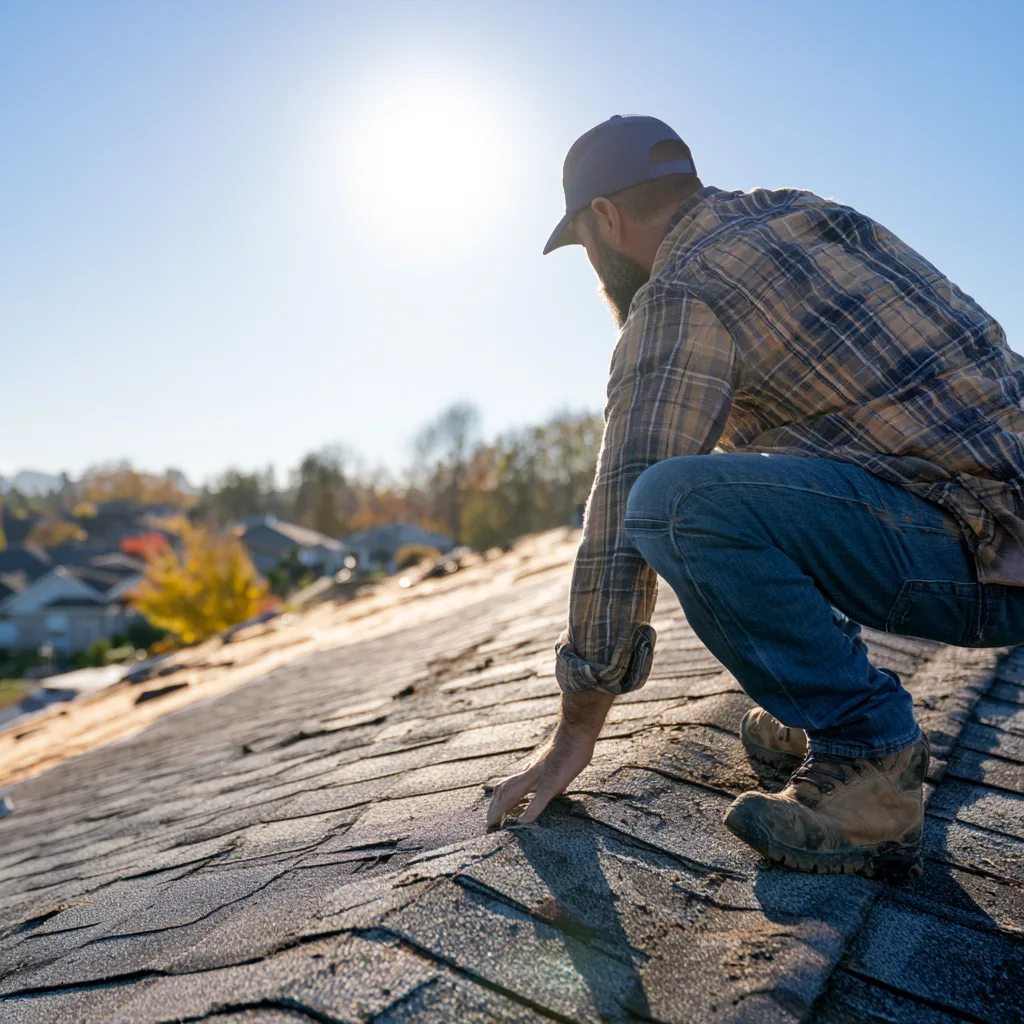
Almost every Fate roof is the first roof a production builder put on. Williamsburg started in 2006, Woodcreek and the Reserve at Chamberlain came out of the same 1,700 acres, and Monterra and Edgewater are newer still. Whole streets hit their teenage years at once, take the same hail, and get the same knock on the door afterward. So the question shows up on a lot of kitchen tables in the same spring: fix it again, or be done with it?
Here is the part worth hearing before anything else. Most roofs that have a problem have a problem in one place. One failed detail at a penetration, a flashing or the ridge. Those are repairs, and they stay repairs even on a roof that is not new.
Replacement earns the job when the trouble is everywhere rather than somewhere, when the roof is far enough along that a repair is a bridge instead of an investment, or when the money stops making sense. The four questions below sort out which one you have.
Work them in order
Four questions that settle it
No single signal decides a specific roof, and nobody can call it from the driveway or over the phone. But these four, answered honestly, get most people to a decision they can defend. Question two is the one that usually does the deciding, and it is the one a good roof repair visit answers with photographs instead of adjectives.
- Where is the water actually coming from?
A stain is rarely under the hole. Water runs along decking and rafters before it drops. A leak that traces back to one penetration, one flashing joint or one lifted section is a repair. A leak nobody can trace to a single source, on a roof that has been patched before, is a different conversation. Find the source first; it decides everything after it.
- What condition is the rest of the roof in?
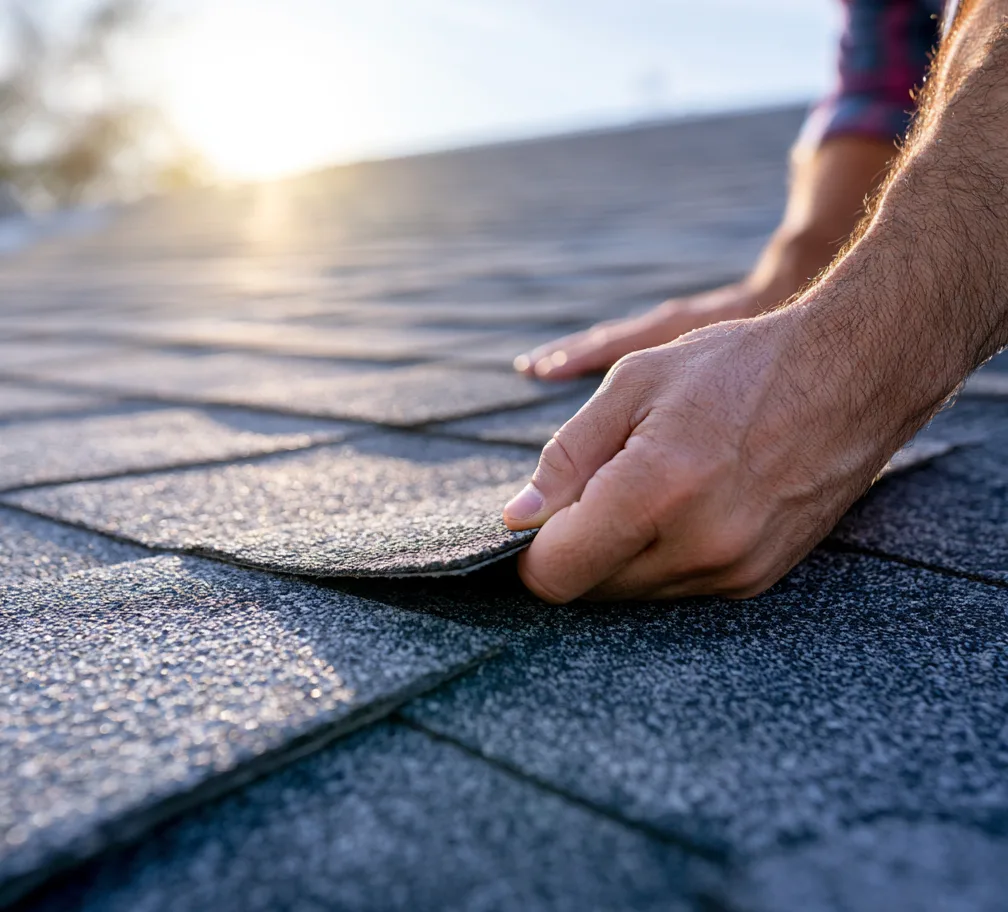
Look past the problem to every other slope. Granules piling in the gutters, tabs that crack when they are lifted, shingles curling at the edges, bare dark patches spread across more than one direction: those say the whole surface is aging together. One damaged area on a roof that is otherwise sound is a repair. Damage scattered across every slope is not.
- How many problems, how often?
One repair on an eight-year-old roof is maintenance. The third call in three springs on the same roof is a pattern, and the pattern is the answer. Keep a rough tally. Homeowners tend to remember the last repair and forget the two before it, which is exactly how a roof quietly costs more than replacing it would have.
- What does the money buy per year?
Not which bill is smaller today. Divide each option by the years of roof it realistically buys. Twelve hundred dollars that gets you two or three more years is worse value than a replacement that gets you twenty, even though it is far less to write a check for. When a repair costs a meaningful share of a replacement and the roof is in its last quarter, the math has usually already decided.
These are rules of thumb, not laws. They describe when replacement starts winning on the arithmetic; none of them proves anything about your roof without somebody looking at it.
What the roof’s age really tells you
Age narrows the question. It does not answer it. The honest industry figure for an asphalt shingle roof is around twenty years, without much reliable difference by product tier, and Texas heat, sun and hail all push toward the shorter end rather than the longer one. So a roof at eight is young, a roof at fifteen is well into middle age, and a roof past twenty is on borrowed time even if it looks fine from the driveway.
What that means in practice is how much a repair is worth, not whether the roof is failing. Fixing a boot on a nine-year-old roof buys years of quiet. The same fix at twenty-two buys a season or two. Neither one says the roof is bad today.
Two things bend the timeline. Ventilation is the big one: an attic that cannot breathe cooks shingles from underneath and can take years off a roof that looks fine from the street. Installation is the other, which is why two houses built the same year by the same builder do not always age the same way. If you do not know how old your roof is, the closing paperwork from when you bought the house is the usual place to find it, and a permit record can help too.
Repair, replace or wait
Three honest outcomes, and waiting really is one of them. What decides between them is the answers above plus the scale of the numbers. If you want the replacement figure in front of you while you think, the roof cost calculator gives a planning range for your own roof size and material.
Repair it
The damage has a source, the rest of the roof is holding up, and the roof has years left. A few hundred to a couple of thousand dollars buys back the life the roof still had in it. This is where most calls land, and a roofer who reaches for replacement on a sound roof with one bad detail is telling you something about the company rather than the roof.
Replace it
The problems are on every slope, the repairs are stacking up, or the roof is deep enough into its life that any fix is a bridge. Replacement is the bigger check and it resets the clock: new underlayment, new flashing, corrected ventilation, and a manufacturer system that carries its own terms. Per year of roof, it is usually the cheaper answer at this point, which is the whole reason to run the arithmetic.
Wait, on purpose
The roof is worn but not leaking, and nothing is urgent. Waiting is a legitimate plan when it is a plan: know roughly what a replacement will cost, watch the roof after storms, fix the small things as they appear, and pick your own timing rather than a storm's. What waiting should not be is not knowing, which is how a small stain becomes decking work.
The Fate wrinkle
When hail tips the decision
Hail is the reason this question comes up here more than in most towns. NOAA has reports of hail in Fate at 1.5 inches and up to 2.75 inches on April 27, 2026, and 2.25 inch hail near Fate on June 11, 2023 with 2.75 inch stones reported in Royse City the same evening. Stones that size bruise a shingle whether or not you can see it from the ground.
A hail bruise is a soft dark spot where granules were knocked off and the mat underneath took the hit. It does not leak today. It ages the shingle faster from that point on. That is why hail changes the calculation: the roof might be functionally fine and still have lost years, and repairs across a bruised surface tend to be the money that gets wasted. Several bruises per slope on more than one direction is the pattern that moves a middle-aged roof from repair to replacement, and it is the reason hail and storm damage gets assessed slope by slope rather than from the driveway.
One caution in both directions. A hail report near your street does not prove your roof was damaged, because a hail swath is patchy and roofs face different ways. And a quiet record does not prove nothing happened. What settles it is somebody on the roof with chalk.
How hail damage gets assessed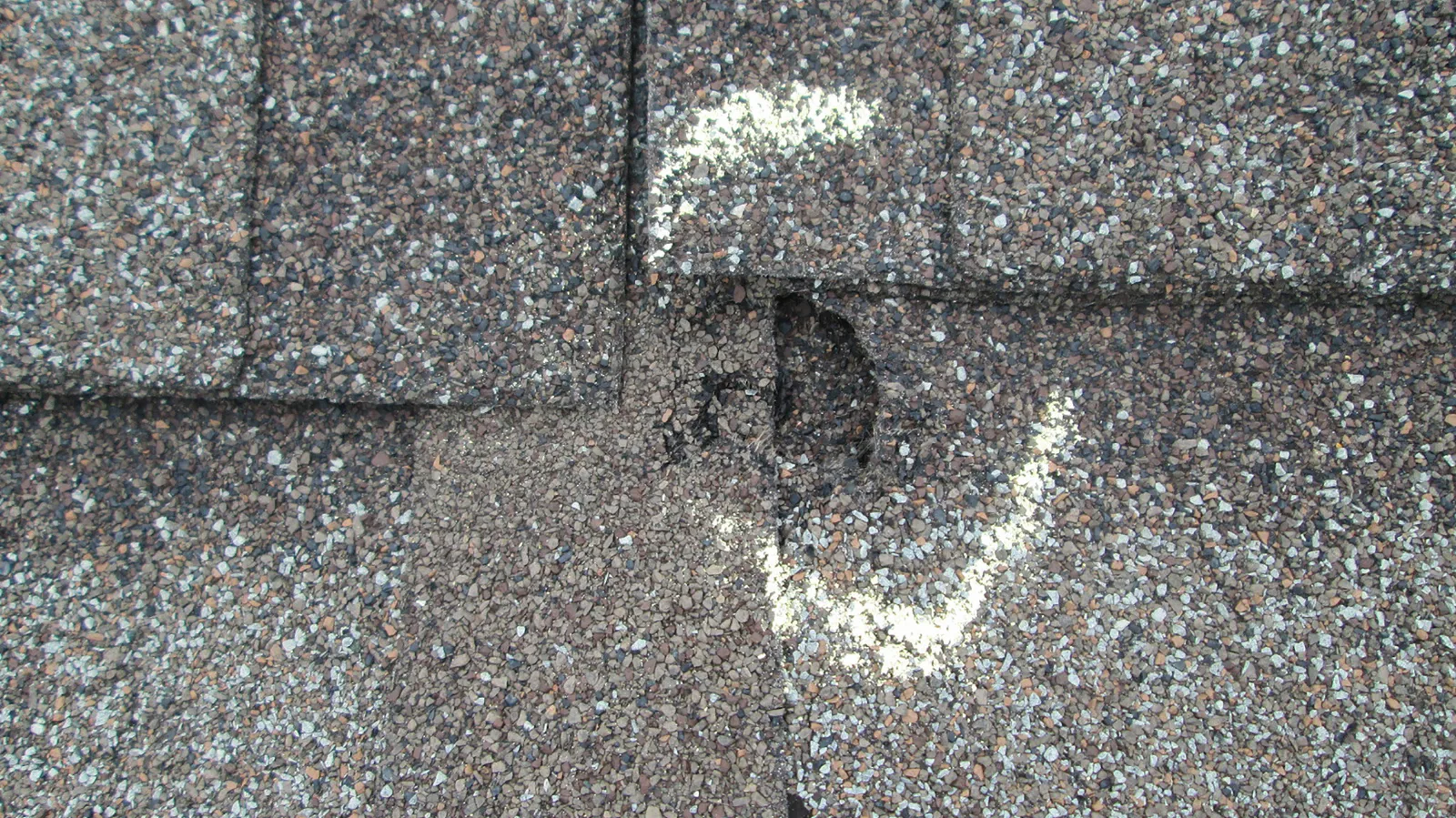
Repair or replace questions
Can I patch one section now and replace the roof later?
Often, yes, and it is a reasonable plan when the roof is sound elsewhere and money is tight this year. Two things to know going in. New shingles will not match weathered ones, so a patch is visible, which matters more on a front slope than a back one. And a repair on a roof in its last few years is buying time rather than value, so it should be priced as such. If the patch is small and the roof has life, do it and sleep well.
My roof is 15 years old and looks fine. Should I replace it anyway?
No. A roof that is doing its job does not need replacing on a birthday. Fifteen is the age to start paying attention: have it looked at after a hail date, keep the gutters clear, fix small things while they are small, and know what a replacement would run so the decision is yours when it comes. An inspection that ends with nothing needed is a good outcome, not a wasted trip.
Three roofers looked at it and I got three answers. Now what?
Ask each of them the same question: show me. A repair recommendation should come with a photograph of the source. A replacement recommendation should come with photographs from more than one slope showing the same condition repeating. Whoever can show you the roof rather than describe it is the one to listen to, and if two of the three show you the same thing, you have your answer.
Does it matter that my neighbors all replaced theirs?
It is a reason to look, not a diagnosis. Same builder, same year, same storm, so the odds are decent your roof saw what theirs did. But hail lands unevenly, some of those roofs were older or already worn, and some people replace because it was offered rather than because it was needed. Get your own roof looked at with the four questions above in hand, and let the answer come from your shingles.
Fate Roofing Co
Get the roof looked at
Send the address, what you noticed and roughly when it started. A stain, a storm date, a repair that keeps coming back, or a bid you would like a second opinion on.
(945) 307-7600