Fate, Texas · Roof coatings
Commercial roof coatings in Fate, TX
A coating can add real years to a commercial roof that is still dry and sound, at a fraction of what replacing it costs. On a roof with wet insulation it is paint over a problem. The difference is evidence, and it is worth having before you sign.
Silicone and acrylic restoration for Fate buildings, and the moisture survey that comes first.
Restoration, not replacement
Roof coatings for Fate commercial buildings
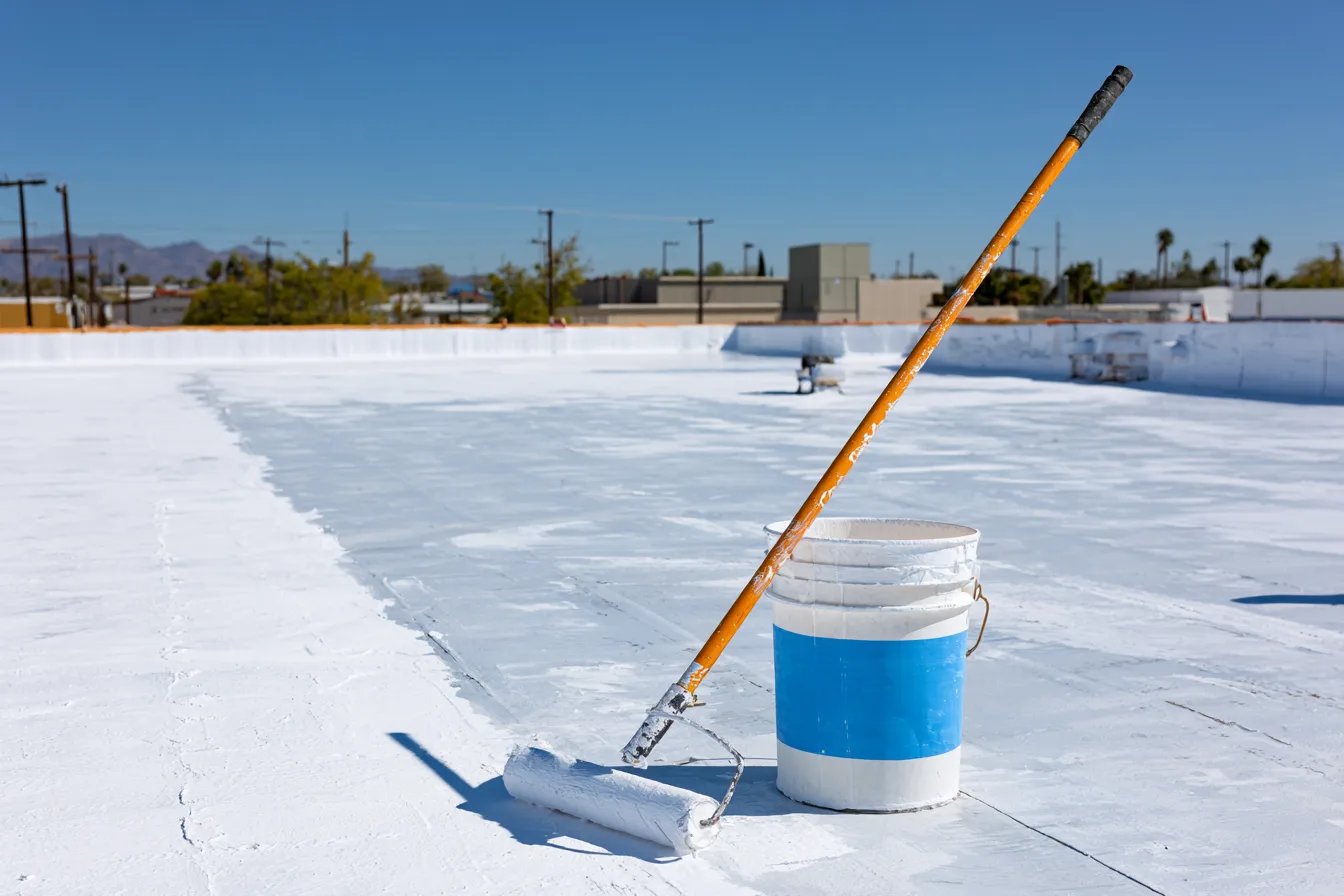
Somebody has probably already pitched you a coating. It is an appealing pitch: a fraction of the price of a new roof, no tear-off, no dumpster where the customers park, and the building never closes for a day. On the right roof every word of that is true.
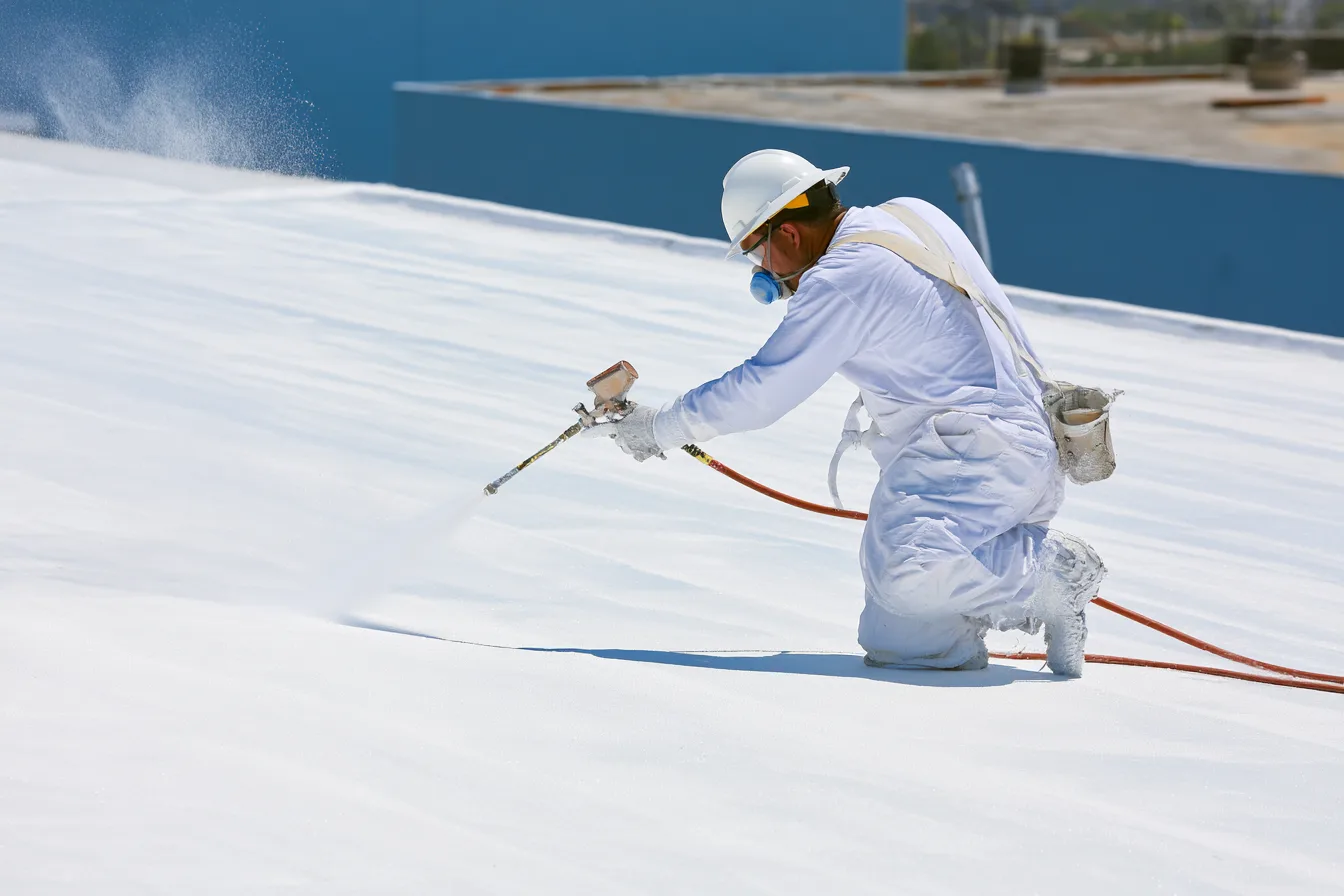
A restoration is a fluid-applied coating, usually silicone or acrylic, sprayed or rolled over a roof that is still in reasonable shape. It reseals the surface, reflects sun and adds years of service. What it does not do is dry out wet insulation, repair a deck or stop a leak whose source nobody bothered to find. So the useful conversation is not about the product. It is about what is under it.
What has to be true first
When a coating buys real years
Restoration is an honest option on a roof that is aging rather than failing. Five conditions decide it, and a bidder should be able to tell you where your roof stands on each one.
The deck is sound
No soft spots underfoot, no visible deflection, no rusted-through steel or rotted wood at the low points. Everything above the deck can be renewed. The deck itself cannot be coated back to health.
The insulation is dry
Not a guess made from the surface. Widespread trapped moisture rules restoration out, because a coating seals the water in and the roof keeps failing quietly under a clean white finish.
The membrane is mostly intact
Seams and flashings can need work, and that is normal; those repairs happen before the coating goes on. What does not work is a membrane that is shrinking, splitting across the open field or already carrying a dozen patches.
Water leaves the roof
Drains flow, scuppers are clear and no low spot holds water for days after a storm. Ponding is the condition most likely to change the answer, and it also narrows which coating can be considered at all.
The leaks are few and known
One or two sources you can point at, rather than a roof that leaks somewhere new after every rain. Leaks nobody can trace usually mean water is already moving inside the assembly.
A roof can fall short on one of these and still be a candidate once the repairs are done. The one that normally ends the conversation is wet insulation across the field.
Silicone or acrylic
Both are common restoration systems and both are reflective. The choice in Fate usually comes down to one question: does water sit anywhere on this roof after a spring downpour?
Silicone
Handles standing water and heavy sun better than anything else in the category, which is what matters on a roof with a low spot that stays wet for a day or two. The tradeoffs are that silicone picks up dirt and gives back some of its reflectivity over time, and it generally costs more per square foot.
Acrylic
Water based, bright, usually less expensive, and straightforward to apply in warm dry weather. Its hard limit is ponding. Standing water breaks a water-based system down, so a roof with real low spots is not an acrylic roof unless the drainage gets fixed first.
When neither fits
Wet insulation, a failing deck, two layers of roofing already on the building, or a membrane coming apart. No coating buys years the roof does not have left, and choosing between two products at that point is choosing the wrong argument.
What a coating proposal should show
The moisture test comes first
One question decides a restoration: is the roof dry underneath? Surface appearance does not answer it, and neither does a clean walk-through. This is the work that should appear on a coating proposal ahead of the coating itself, along with any flat roof repair the roof needs before a drop of material goes on.
- Moisture survey
Infrared scanning, a capacitance or nuclear meter, or a combination, to map where water is sitting in the insulation. The result should reach you as a drawing of the roof with the wet areas marked, not as a verbal all-clear.
- Core samples
Small cuts through the assembly, patched afterward, showing the layer count, the insulation type, whether it is wet and what the deck looks like. Cores are how a bidder learns the difference between one roof and two.
- Adhesion test
A test patch of the actual coating applied and pulled after it cures, confirming it bonds to your membrane. Membranes weather differently, and some need a wash or a primer before anything will stick.
- Repairs before coating
Seams rewelded or retaped, base flashings rebuilt, pitch pans refilled, drains cleared, wet insulation cut out and replaced. Coating over a bad detail hides it instead of fixing it.
- Thickness and coverage
Gallons per square, number of coats, whether reinforcing fabric goes into seams and details, and the dry film thickness the system is being built to. Coating terms are tied to applied thickness, so this line decides what you actually bought.
- Documents
Which manufacturer system, the conditions it depends on, what the term covers and excludes, and who inspects the work. Those terms come from the coating manufacturer and the applicator, and they should be in your hands before work starts.
Coating versus replacement on the same roof
Here is the comparison that makes restoration worth considering. On a roof that qualifies, a coating costs a fraction of what tearing off and replacing the same roof costs, and it extends the life you already have rather than starting over. It is also far less disruptive: no tear-off noise over the tenants, no roof open at closing time, no crane in the fire lane.
What it cannot do is reset the roof. The insulation, the deck and the layers under the coating are the ones you already own. When the survey comes back with wet areas across the field, or the cores find a second layer, the money is better spent on TPO replacement than on a new surface over a wet roof, and a replacement is the one chance to fix the drainage properly.
The way to hold both of those truths at once is to decide on evidence rather than on price. Ask for the moisture drawing. Ask what the scope does with the areas marked wet. Ask what happens if the cores find something different from what was assumed. A restoration contractor who has already thought that through is the one worth hiring.
Roof coating questions in Fate
How long does a roof coating last?
Coating systems are commonly offered with terms in a ten to twenty year band, and those terms are tied to how thick the coating goes on and to the manufacturer’s own conditions. Two proposals naming the same product can carry different terms because one is applying more material. Ask for the term, the thickness it depends on and the list of exclusions.
Can a roof with ponding water be coated?
Silicone is the system made for wet low spots, so it can be. Ponding usually means the roof needs drainage help more than it needs a new surface, though. Tapered insulation, a cricket behind a curb or a drain that actually drains fixes the cause. Acrylic over a roof that ponds is a short-lived roof.
Will a coating stop the leak we already have?
Only if the leak is coming from general surface wear, which is unusual. Most leaks start at a seam, a flashing, a drain or a penetration, and those get found and repaired first, then coated over. Flat roof repair covers what a proper fix looks like on each system.
Does a coated roof still need maintenance?
Yes, and most coating terms expect it. A coating is a surface. The drains still need clearing, the details still need watching and rooftop traffic still does damage. Scheduled inspections and maintenance keep the restoration doing the job you paid for.
What do you need to tell whether my roof qualifies?
The address and the building use, the roof type and roughly how old it is, whether there are current leaks and where, and any survey or proposal you already have in hand. After that it takes someone on the roof with the right instrument. Whether restoration is on the table is the answer that inspection gives you, honestly, either way.
Fate Roofing Co
Ask whether your roof qualifies
Send the building and what you know about the roof. If a coating has already been pitched to you, send that too. The answer starts under the surface, not with the price.
(945) 307-7600