Fate, Texas · Flat roof repair
Flat roof repair in Fate, TX
The stain in the ceiling is almost never under the hole. Low-slope roofs leak at a small number of predictable places, and a repair made the right way for your membrane is a real fix rather than another season of patching.
Seams, flashings, drains and penetrations on Fate commercial buildings.
Finding it before fixing it
Flat roof repair for Fate buildings
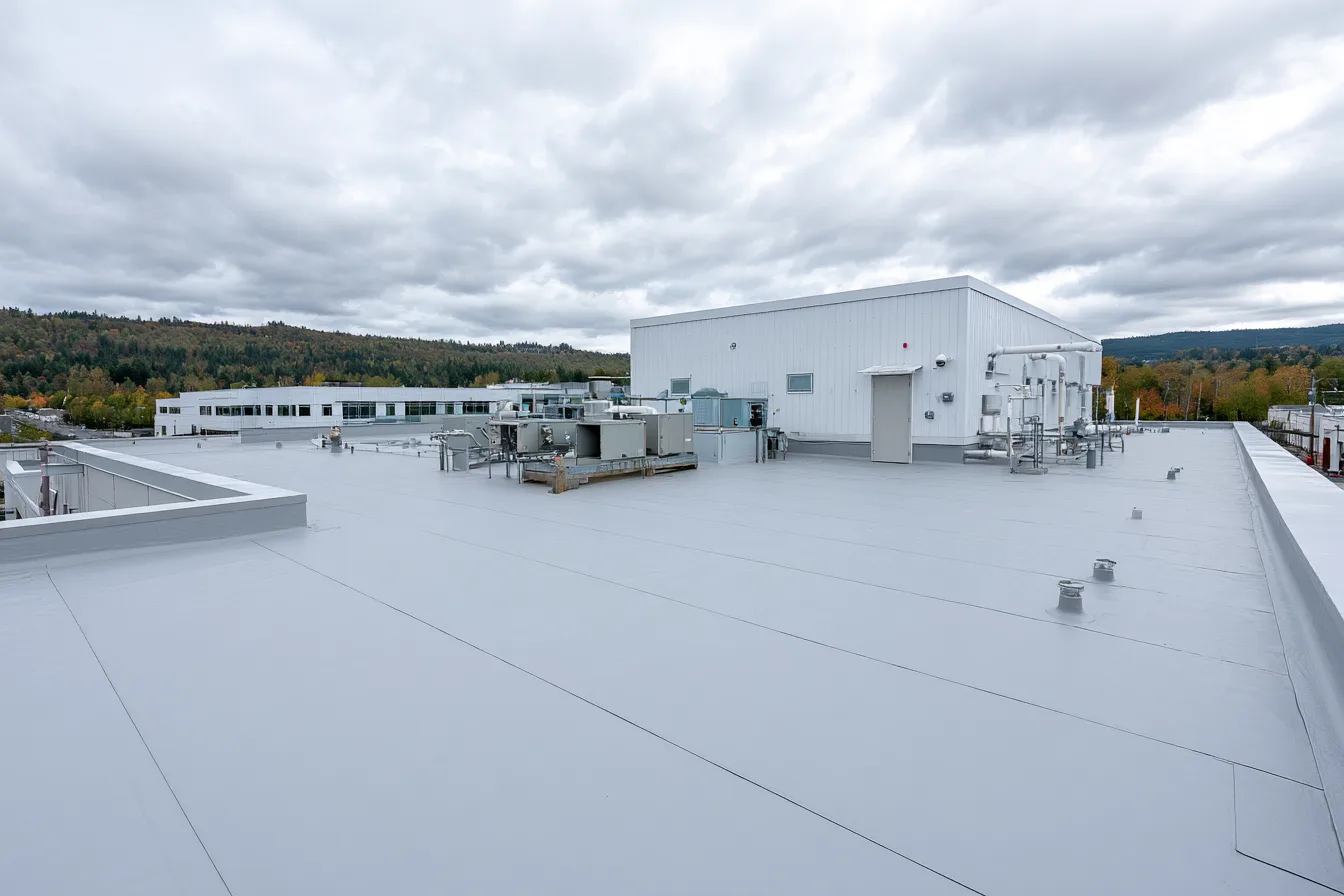
A flat roof leak is rarely directly above the drip. Water gets in at a joint, runs along the top of the insulation or down a deck flute, and comes through the first opening it finds, which can be a bay over and thirty feet away. That is how the same leak gets paid for twice. The patch went where the water appeared instead of where it got in.
The better news is that low-slope roofs are repairable roofs. They fail in a handful of predictable places, and a repair made with the right method for your membrane holds for years. What does not hold is a bucket of black mastic, which is how a straightforward repair turns into an annual line item.
The usual suspects
Where the water gets in on a flat roof
Every one of these leaves evidence, and nearly all of it is on the roof rather than in the ceiling. Tracing the leak back from the stain is the actual job, which is why commercial roof inspections usually come before a repair quote on a building nobody has records for.
Seams
Where two sheets are joined. On a welded membrane an open seam shows as a thin straight gap a probe will catch; on a taped or glued one it lifts at the edge. Seams run in lines, so a row of ceiling stains in a line often means a seam.
Curb and equipment flashing
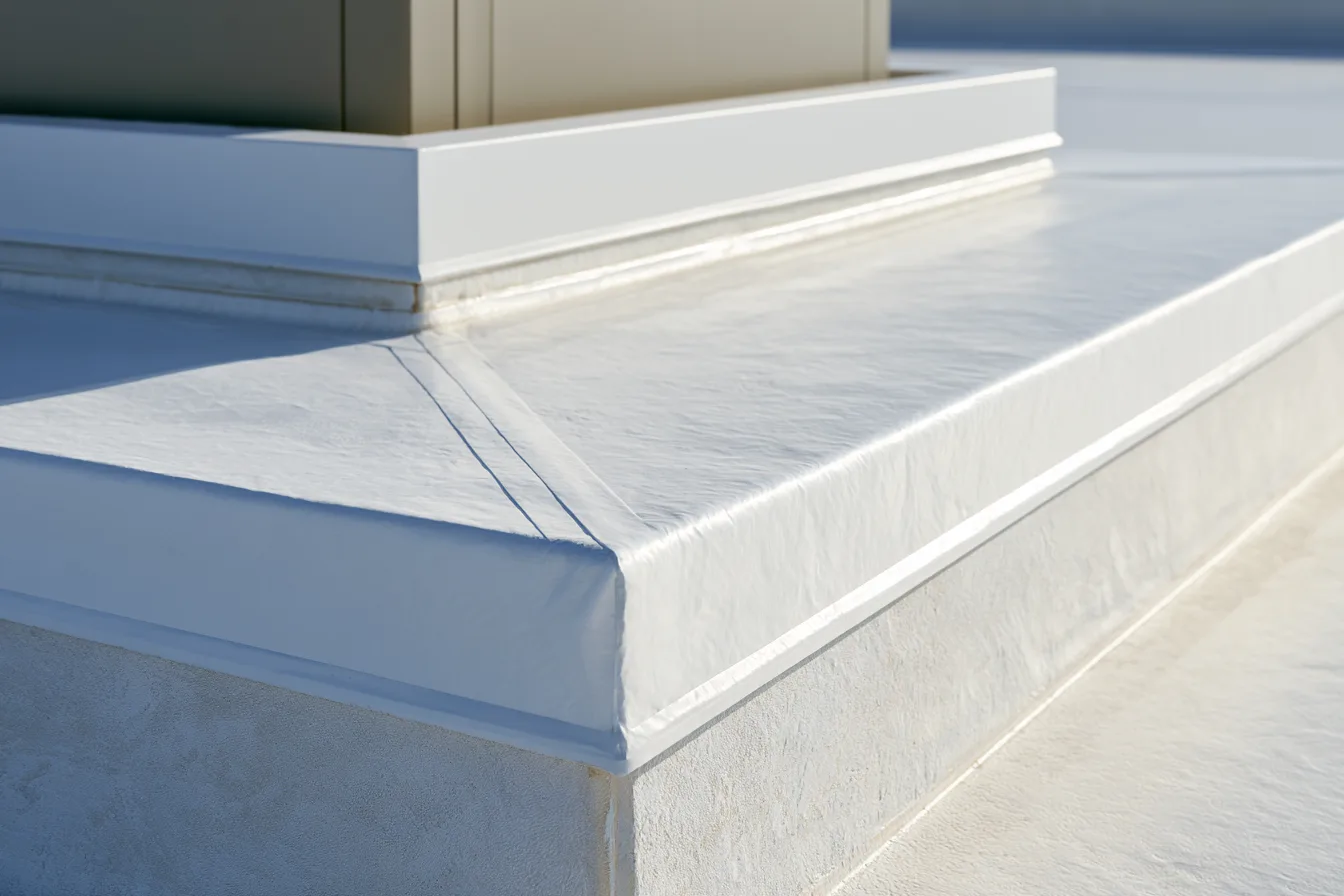
The wrapped corners around rooftop units, exhaust fans and skylights. Sealant at the top of a flashing dries and cracks, corners split, and a unit that was serviced last month may have had its flashing stepped on in the process.
Parapet walls and terminations
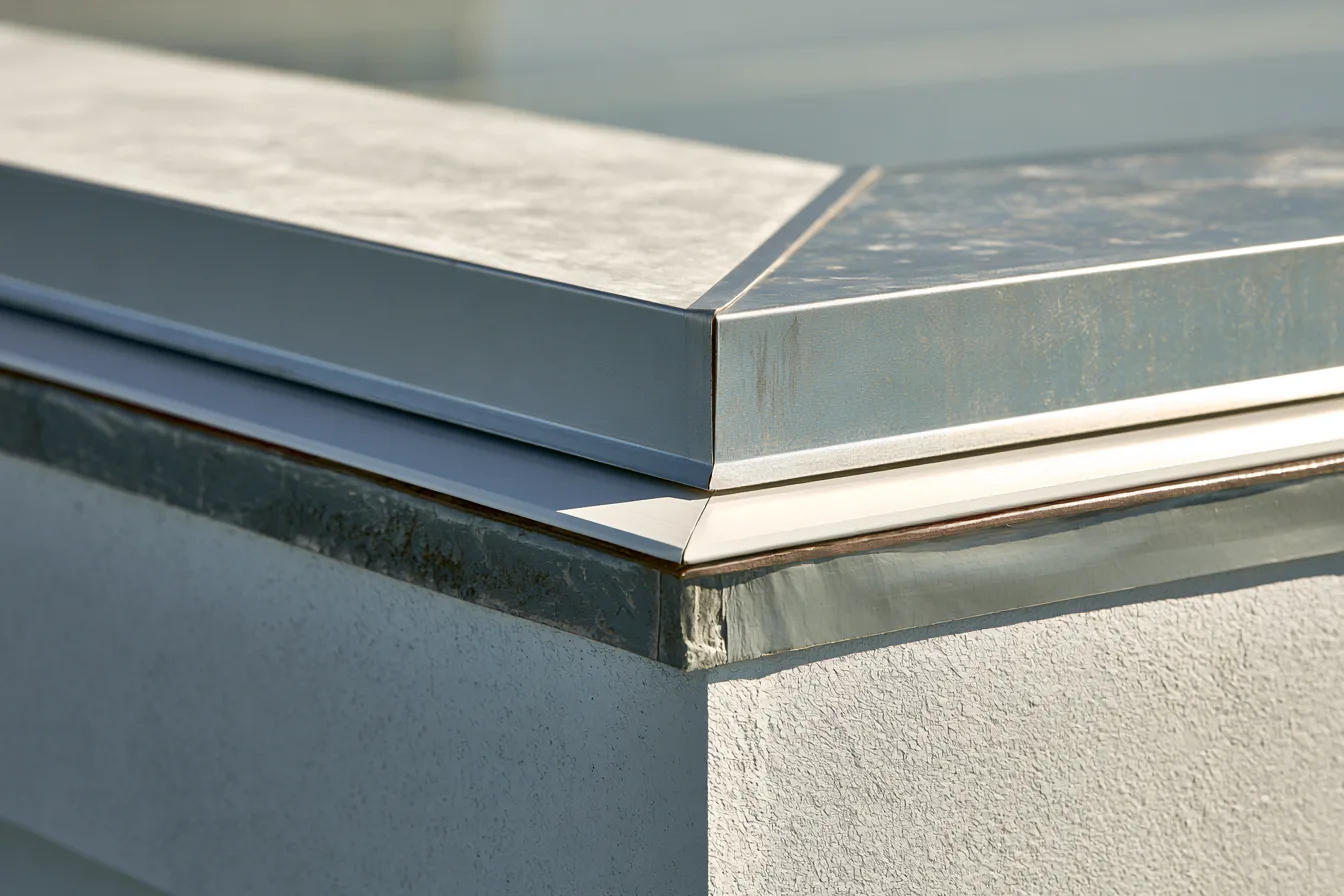
Where the membrane turns up a wall and stops, under coping or a termination bar. Wind-driven rain gets over and behind open coping joints, and the water often shows up well inside the building.
Pipes, vents and pitch pans
Every penetration is a hole that was sealed once. Pipe boots crack with age and sun, and pitch pans, the small filled boxes around odd-shaped penetrations, shrink over time and need topping up.
Drains and clamping rings
The strainer, the clamping ring and the membrane all have to seal to the drain bowl. A loose ring leaks in every rain and sends water straight down the pipe chase, which makes it look like plumbing rather than roofing.
Ponding and punctures
Standing water does not make a hole by itself, but it finds every weakness and it hides the puncture a dropped tool left behind. Low spots are where a small problem becomes a leak.
A proper repair by roof type
What counts as a real repair depends entirely on what is up there. A method that is correct on one membrane does nothing at all on another, which is why a repair visit should start by identifying the system.
| System | How it usually fails | What a proper repair looks like | What a smear of mastic misses |
|---|---|---|---|
| TPO or PVC | Seams welded cold or over dirt, splits above fastener plates, punctures, split flashing corners. | A patch of the same membrane, surface cleaned, heat welded over the damage with rounded corners, the weld probed and the cut edge sealed. | Mastic sits on a thermoplastic sheet without bonding to it. It sheds water for a season, then peels away and takes the evidence of the real defect with it. |
| EPDM | Seam adhesive letting go at the laps, shrinkage pulling flashings tight at corners, punctures. | The area cleaned and primed, then a rubber patch or cover tape rolled in and the edge sealed. Corners usually want a preformed piece rather than a field-cut one. | Nothing bonds to unprimed rubber. The patch lifts at its edge within a few months and water tracks underneath the repair. |
| Modified bitumen or built-up | Open or cracked laps, blisters, alligatored surfacing, failed base flashings at walls. | A torch-applied or cold-applied patch built in the same plies as the roof, carried well past the failure, with the surfacing restored over it. | A skim of mastic bridges a crack that is still moving and cracks along with it. The lap underneath keeps opening and the insulation keeps getting wet. |
| Low-slope metal panels | Fasteners backing out, failed washers, open end laps, sealant gone at ridges and transitions. | Fasteners replaced or upsized with new washers, laps opened, cleaned and resealed with butyl, and cover tape or a panel section where the metal itself has gone. | Sealant over a screw head hides a hole that is still moving as the panel expands. Next summer the same leak comes back in the same place. |
Anything done during a storm is temporary by definition. Membrane repairs need a dry, clean surface to weld or bond to, so a rain-day visit should be described as temporary in writing with the permanent repair scheduled.
Fixing the cause
Drains, scuppers and the low spots
Most flat roof repairs that come back are drainage problems being treated as leaks. If the water still sits in the same place afterward, the repair is on borrowed time.
- Clearing and keeping the drains
Strainers back in place, leaves and gravel out of the bowls, leaders checked for blockage. It is the cheapest work on a roof and the most commonly skipped.
- Reseating drains and clamping rings
Rebuilding the connection between the membrane and the drain bowl, replacing a cracked bowl or a missing strainer, and restoring the sump where the roof dishes down toward it.
- Overflow scuppers and secondary drainage
A roof with a parapet needs a way for water to leave if the primary drains block, and the building code treats that as a requirement rather than an option. The openings should be clear and at the height they were designed for.
- Tapered insulation and crickets
Sloped board added to move water toward the drains, with wedges built behind curbs and between drains so water is never asked to stand still. This is how a low spot gets fixed instead of patched.
- Ponding that means something else
Water pooling somewhere new can mean the deck is deflecting or that the insulation below has compressed and stayed wet. Then the low spot is a symptom, and the repair scope has to go deeper than the surface.
When repairs stop making sense
There is a point on every flat roof where one more repair is the expensive choice. It is rarely dramatic. It usually arrives as a manager noticing this is the fourth invoice this year, in the fourth different place.
Three findings change the answer. Wet insulation across a large share of the roof, because water inside the assembly keeps traveling and no patch reaches it. Two layers already on the deck, because another cover is not permitted and the honest job is a tear-off. And failures that are spreading rather than repeating, seams opening in several bays and flashings brittle everywhere you touch them. While the roof underneath is still dry, roof coatings are the middle option. Once it is not, a TPO roofing replacement is the honest plan, and it is the moment to correct the drainage while the roof is open.
The comparison worth making is not this repair against that replacement. It is what the roof has cost over the last three years, plus what the tenant disruption cost, against a roof with a start date and a maintenance plan behind it.
Flat roof repair questions in Fate
Why does the same spot keep leaking after it was repaired?
Usually because the repair went where the water appeared rather than where it entered. Water travels on top of the insulation and along deck flutes before it finds a way through. A repair that lasts starts with locating the entry point, which can mean a water test, an infrared scan or lifting a small area to see where the insulation is wet.
Can hail damage a flat roof without anyone noticing?
Easily. Hail on a membrane leaves bruises and small splits rather than the obvious granule loss you would see on shingles, and the damage often shows first at seams and around equipment. If the building sits near the reports in the Fate storm history, a documented inspection with dated photos gives you something to work with before a claim deadline passes.
How do I find out what kind of roof I have?
Usually from the flashings and a small core cut. Welded seams under a light-colored surface point to TPO or PVC, a black rubber sheet with taped seams is EPDM, layered asphalt with a granulated cap is modified bitumen, and gravel over asphalt plies is a built-up roof. Old proposals and warranty paperwork are the other place to look, which is one good reason to keep a roof file.
Is one repair visit enough to find a leak?
Often, when the source is obvious from the roof: an open seam, a split boot, a loose drain ring. Sometimes it takes a second visit, because a leak that only appears in wind-driven rain or after a long soaking needs those conditions to show itself. An honest roofer will say which situation yours looks like rather than promising a single trip.
What should I include when I report a leak?
The address, where the water shows up inside and roughly when it started, whether it leaks in every rain or only in a driving one, the roof type if you know it, and how to get on the roof. Photos of the stain and of the roof help. Then somebody gets on the roof and finds the source.
Fate Roofing Co
Tell us where the roof is leaking
Where the water shows up, when it started, and what kind of roof you have if you know it. If it has been patched before, say so. That is the shortest path to a repair that holds.
(945) 307-7600