
TPO roofing
How a welded single-ply membrane goes together, thickness and attachment choices, and recover versus tear-off.
TPO roofingFate, Texas · Commercial roofing
A leak over a sales floor, a roof of unknown age on a building you just bought, or a brand-new membrane that needs a maintenance plan before the warranty clock starts. Commercial roofs in Fate get planned around the building and the people in it, not just the square footage.
TPO and single-ply, coatings, flat roof repair, inspections and maintenance. Written for owners and property managers.
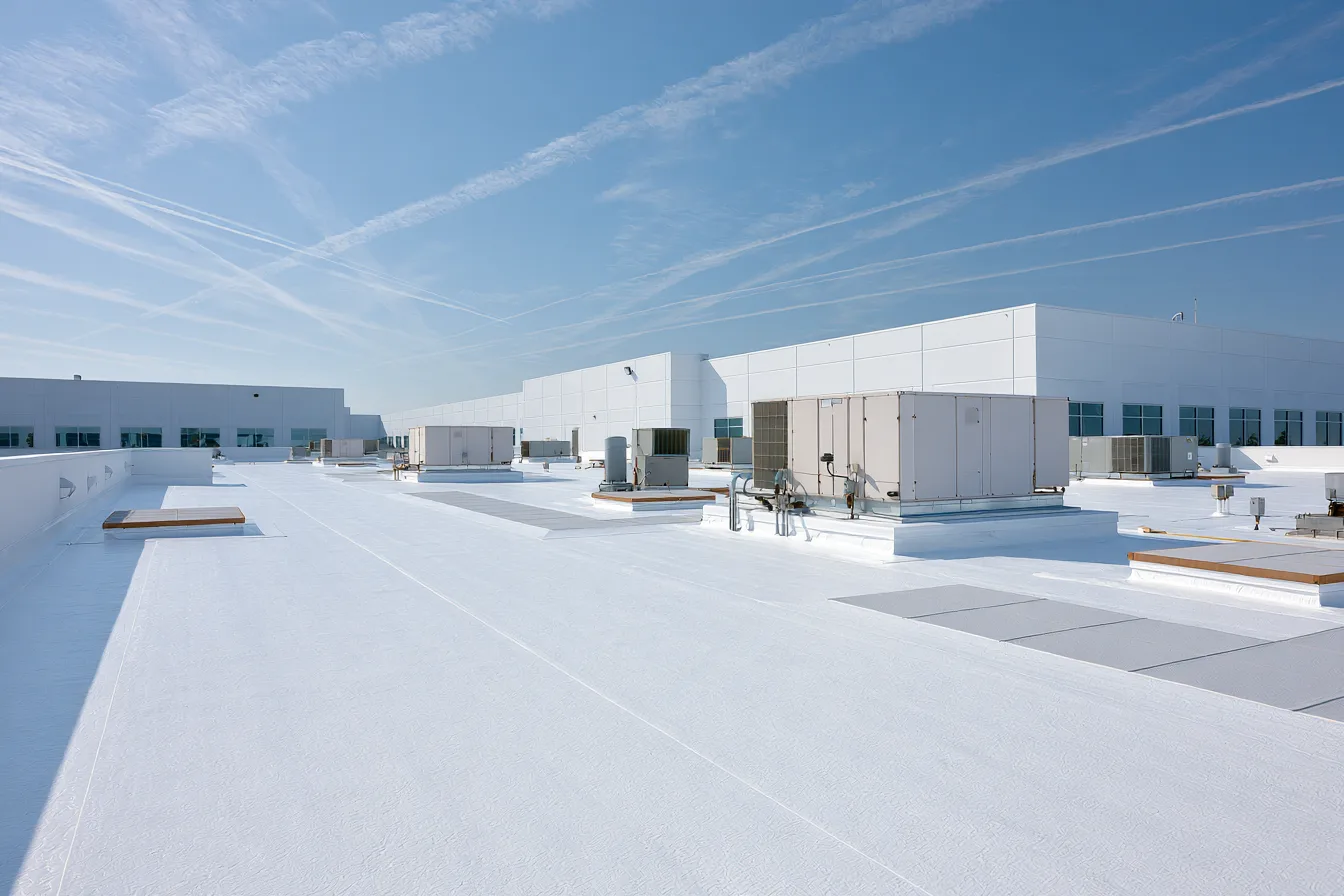
Owners and property managers
Fate’s commercial roofs come in two ages. There are the strip centers, churches, schools and shops along Highway 66 and the I-30 frontage that were here before the new development, and there are the new roofs going on with Lafayette Crossing, Fate Yards and the pad sites along FM 551. Both need the same three things: water that actually leaves the roof, details that hold at every seam and curb, and someone keeping a record.
If you manage the building, you also need the work to happen without closing the store, blocking the loading dock or dropping debris on a tenant’s customers. That is part of the roof plan here, not an afterthought.
Four pages, one for each decision an owner ends up making.
How a welded single-ply membrane goes together, thickness and attachment choices, and recover versus tear-off.
TPO roofing
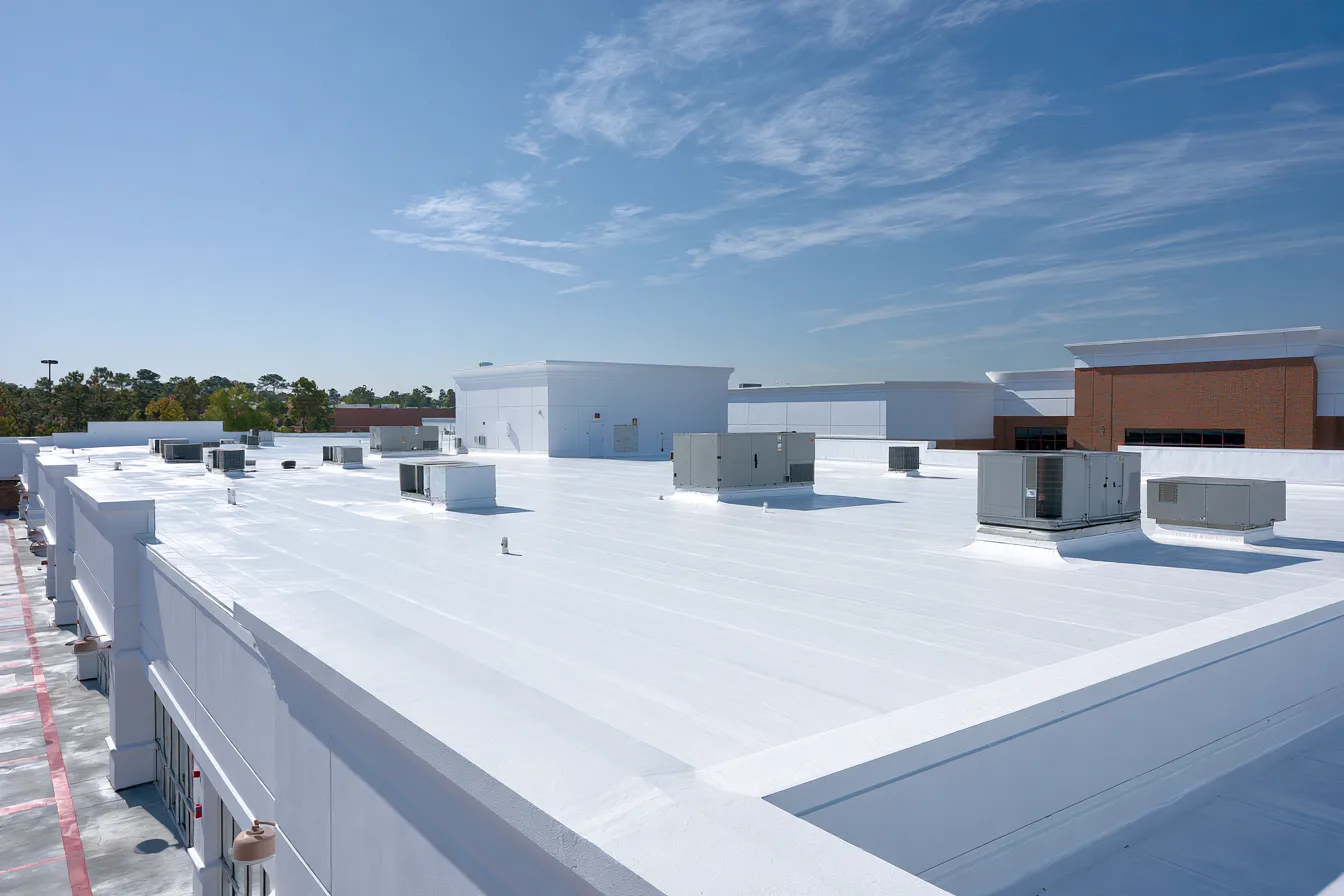
When a silicone or acrylic restoration adds years to a sound roof, and when it is paint over a wet one.
Roof coatings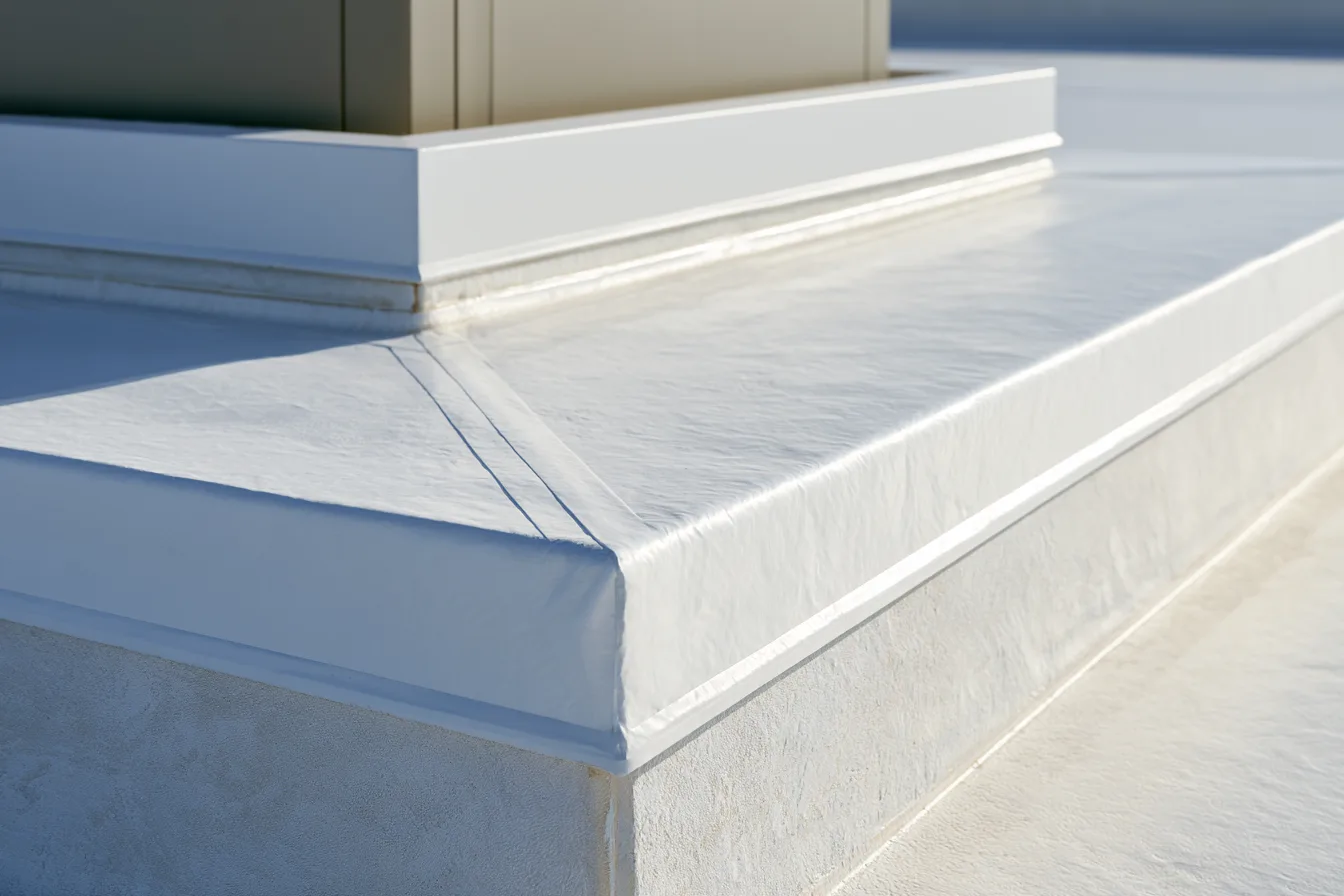
Seams, flashings, drains and penetrations, repaired the right way for the membrane you have.
Flat roof repair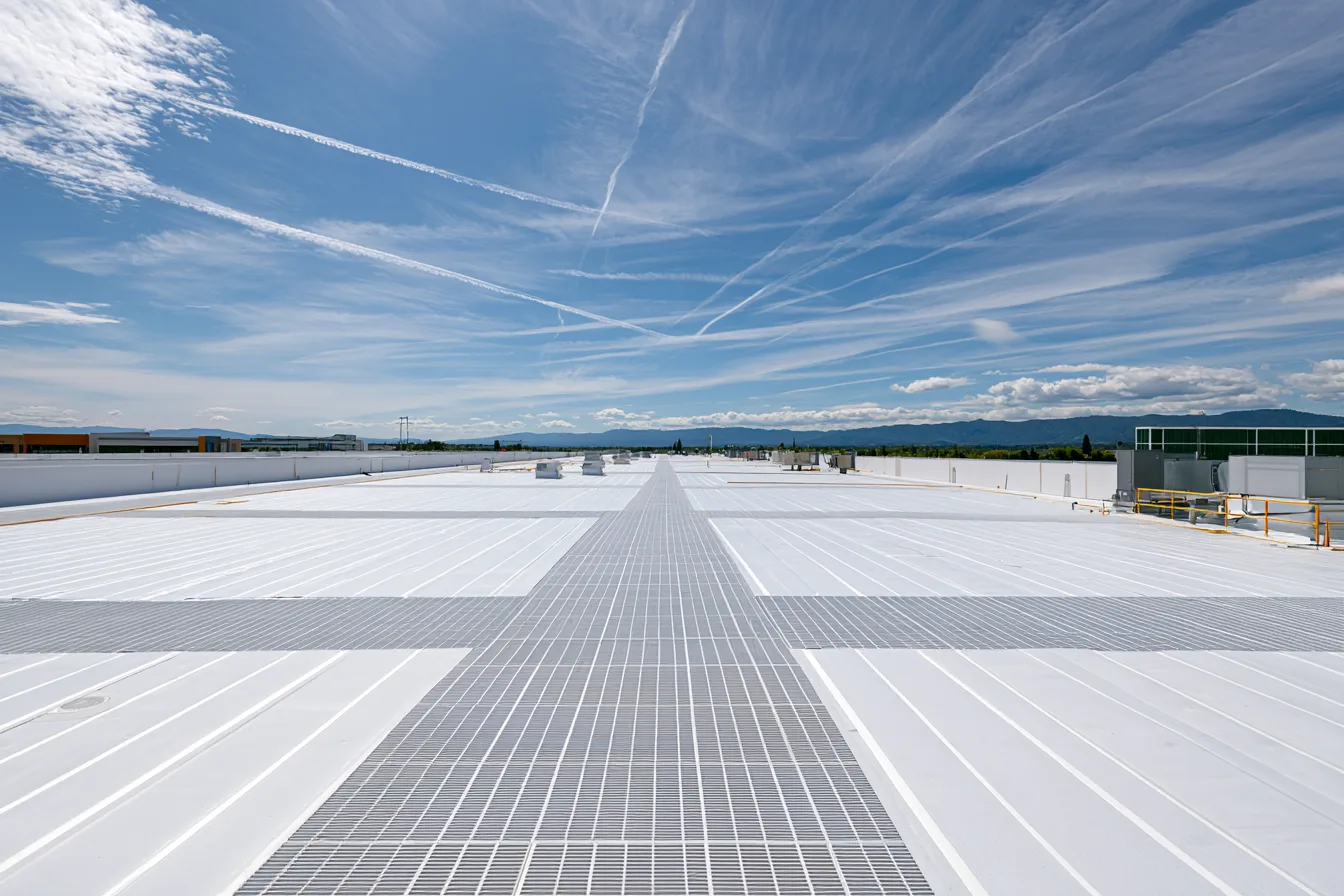
Spring, fall and after each storm. A roof file, a schedule and a budget that sees the replacement coming.
Inspections and maintenanceLow-slope roofs do not use shingles. They use a membrane welded or glued into one watertight skin, a layered asphalt system, metal panels, or a coating over a roof that is still sound. The right one depends on the building, not on a brand. TPO roofing is the most common choice on new commercial buildings and gets its own page.
| System | What it is | Where it fits | The question to ask |
|---|---|---|---|
| TPO | A white heat-welded thermoplastic sheet, usually 45 to 80 mil thick, fastened or fully glued to the insulation. | Most new retail, office and warehouse roofs. Reflects sun, which matters in a Texas August. | What thickness and attachment, and how are the seams and curbs being detailed? |
| PVC | A heat-welded thermoplastic sheet that shrugs off grease and chemicals. | Restaurants and any roof with kitchen exhaust. | Is the exhaust the reason for PVC, and are the flashings the same material? |
| EPDM | A black synthetic rubber sheet with taped or glued seams. | Long track record; common on older buildings. | How are the seams being addressed, and does the black surface suit the cooling load? |
| Modified bitumen | Reinforced asphalt rolls applied in layers, torched or cold-applied. | Smaller low-slope roofs and roofs that get walked on. | What condition are the existing plies in, and how do repairs tie into them? |
| Metal | Standing-seam or screw-down panels on steeper commercial roofs. | Warehouses, shops and light industrial with enough slope. | What gauge, coating and fastening, and how are penetrations sealed? |
| Coating | A silicone or acrylic layer applied over an existing roof that is dry and sound. | A restoration, not a new roof. | What did the moisture survey find, and what preparation is included? |
Lifespans for all of these are ranges that depend on installation and maintenance more than on the product name. Warranty terms come from the manufacturer and the installing contractor, not from this website.
Joints and low spots
A membrane rarely wears through in the middle first. Water finds the joints and the places it can sit. Knowing that turns a scary leak into a manageable flat roof repair more often than not.
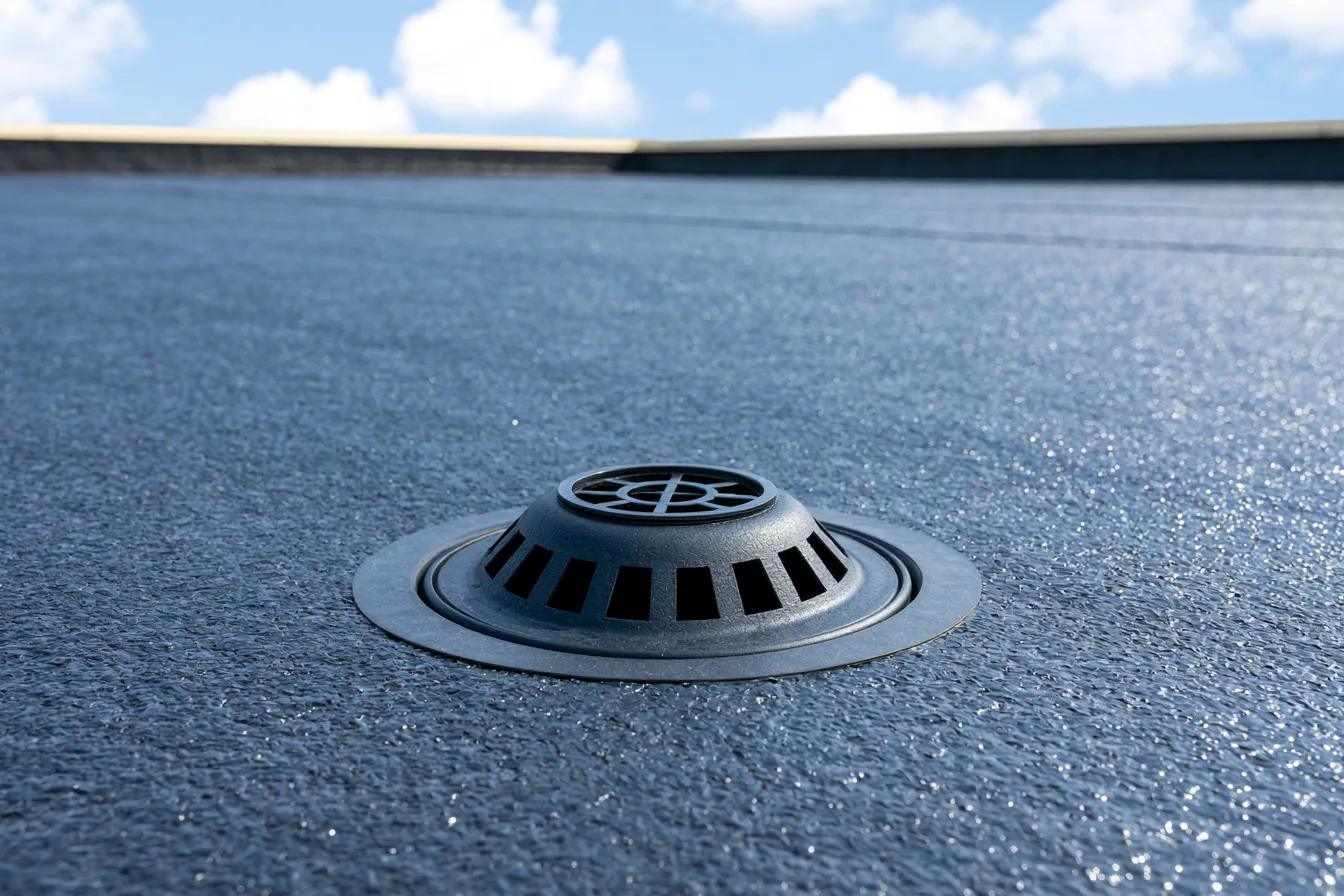
Water that sits for days instead of draining breaks the surface down, finds every small weakness and adds weight. Blocked drains and dead-flat sections are the usual cause.
Where sheets join and where the roof meets a wall, a parapet or a curb. A seam that lets go or a flashing that pulls away leaks long before the field wears out.
Every pipe, vent, drain and rooftop unit is a hole that has to be sealed. More equipment means more places to watch.
HVAC service, satellite installs and roof access take a toll. Walk pads and a rule about who goes up there matter.
Years of Texas sun make some membranes brittle. Blisters and chalking are the early signs, and an inspection catches them before they open.
Drainage and detailing decide how a flat roof ages. The code even designs for the primary drains failing, which is why overflow scuppers and clear drains are not optional.
The honest call comes down to moisture. A roof that is dry underneath has options; a roof with wet insulation does not. A restoration with roof coatings is the middle path when the roof qualifies.
A failed seam, a split flashing, a cracked pipe boot or a clogged drain on an otherwise serviceable roof. Fixed with the right method for the membrane, not a smear of mastic, and recorded in the roof file.
A coating over a roof that is dry, sound and mostly intact. It reseals the surface, reflects sun and can add years at a fraction of a tear-off. It needs a moisture survey first; it is not a cure for a wet roof.
Saturated insulation, a deteriorating deck, two layers already on the roof, or leaks that keep coming back. At that point a new membrane is the honest answer, and it is the chance to fix the drainage for good.
Access and coordination
Work on an occupied building has to fit around the business inside it. These are the things a proposal should settle before the first delivery arrives.
Customer doors, the loading dock, emergency exits and the drive aisle need usable routes. Material drops and the dumpster go where they do not block a tenant’s morning.
Air-conditioning units, exhaust fans, gas lines and conduit sit on curbs and stands that have to be flashed or lifted. HVAC contractors may need to be scheduled alongside the roofer.
Occupied suites, sensitive inventory, server rooms and known leak spots get named in the plan, so the crew knows where to be careful and the tenant knows what to expect.
Tear-off is loud and torch or adhesive work has a smell. Restaurants, clinics and schools often need the work sequenced around opening hours.
Roof edges, fall protection, ladders and material staging affect the parking lot and the sidewalk. The plan should say where they go and how long.
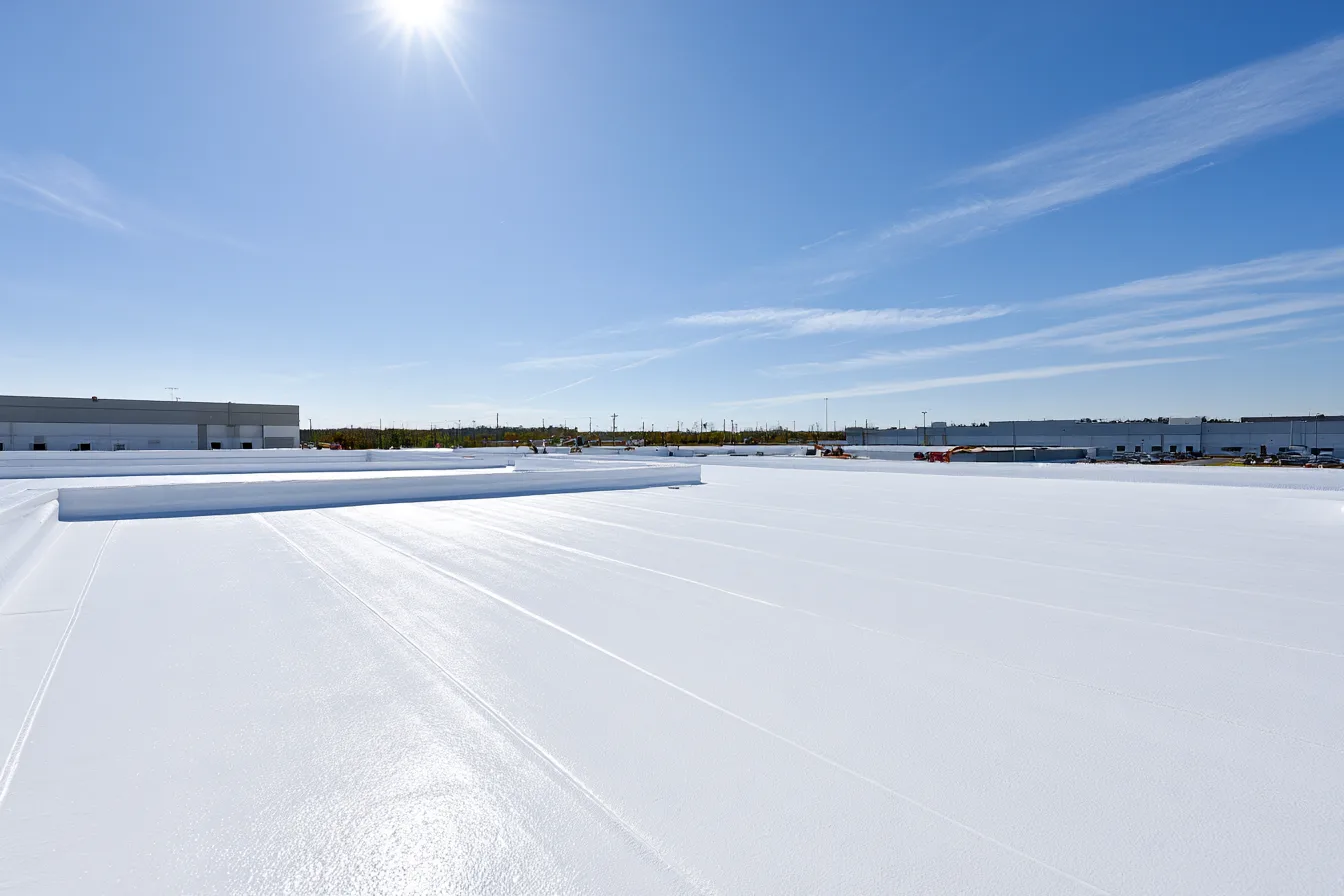
Fate is building
The City lists more than 350 acres of available land between Interstate 30 and Highway 66. Lafayette Crossing is planned as 267 acres at I-30 and FM 551 with more than 400,000 square feet of commercial space, and Fate Yards is a 50-acre commercial project at Memorial Parkway and I-30 with Fate’s first hotel. Every one of those roofs will be new for a few years, and then it will be a roof with a history.
A new membrane is the cheapest roof to keep. Scheduled inspections and maintenance from the first year, with a roof file and a spring, fall and after-storm schedule, is what separates a roof that reaches the far end of its range from one that fails early.
A patch at a leaking seam and a full replacement can both arrive as a single number. The difference is in what the proposal says about the roof it found and the roof it will leave behind.
A roof plan for the building
The assembly and layer count, the deck type, moisture survey or core results, drainage condition and the reason for the recommendation.
Membrane type, thickness and attachment, insulation and slope, flashings at walls, curbs and penetrations, edge metal, walk pads.
Drains, scuppers and overflows, tapered insulation or crickets where water sits, and what happens to the low spots.
Schedule, hours, staging, equipment coordination, tenant notice and who is responsible for what.
Manufacturer warranty program and what qualifies for it, the contractor’s workmanship terms, exclusions, and how changes are handled.
Warranty programs, certifications and financing belong to the manufacturer and the contractor on the job. The proposal should show the documents, not just name them.
A leak at one seam, one flashing or one clogged drain on a roof that is otherwise dry is a repair. Leaks in several places, soft spots underfoot or insulation that squishes are signs the roof is wet inside, and repairs stop making sense. The flat roof repair page shows what a proper repair looks like for each membrane.
No. A coating restores a roof that is still sound; it does not fix a wet one. The question to ask before any coating is what the moisture survey found. The roof coatings page explains when it buys real years and when it is paint.
It can. Hail bruises and punctures on a membrane are harder to see than on shingles, and the damage often shows up first at seams and around equipment. If the building is within a few miles of the reports in the Fate storm history, an inspection with photos is worth having before the next hard rain and before any claim deadline.
The address and what the building is used for, the roof type if you know it, how old the roof is, where it leaks and when it started, any rooftop equipment, and your access restrictions such as hours or tenant notice. If you have old proposals, warranty documents or photos, mention them. The roof gets looked at and the scope written from what is found.
Fate Roofing Co
The address, what the building does, where the roof is giving you trouble and any hours or access limits. Start there and we will put a plan together.
(945) 307-7600