Fate, Texas · Gutters
Gutter installation and repair in Fate, TX
Gutters are the half of the roof system you can actually reach, and the half most people ignore until water is running down the fascia or pooling next to the slab. Whether you need a repair, a resized run or a full replacement usually shows itself in one hard rain.
Seamless installation, repairs to sagging and overflowing runs, sizing, downspout placement and guards.
Where the water goes
Gutters for Fate homes
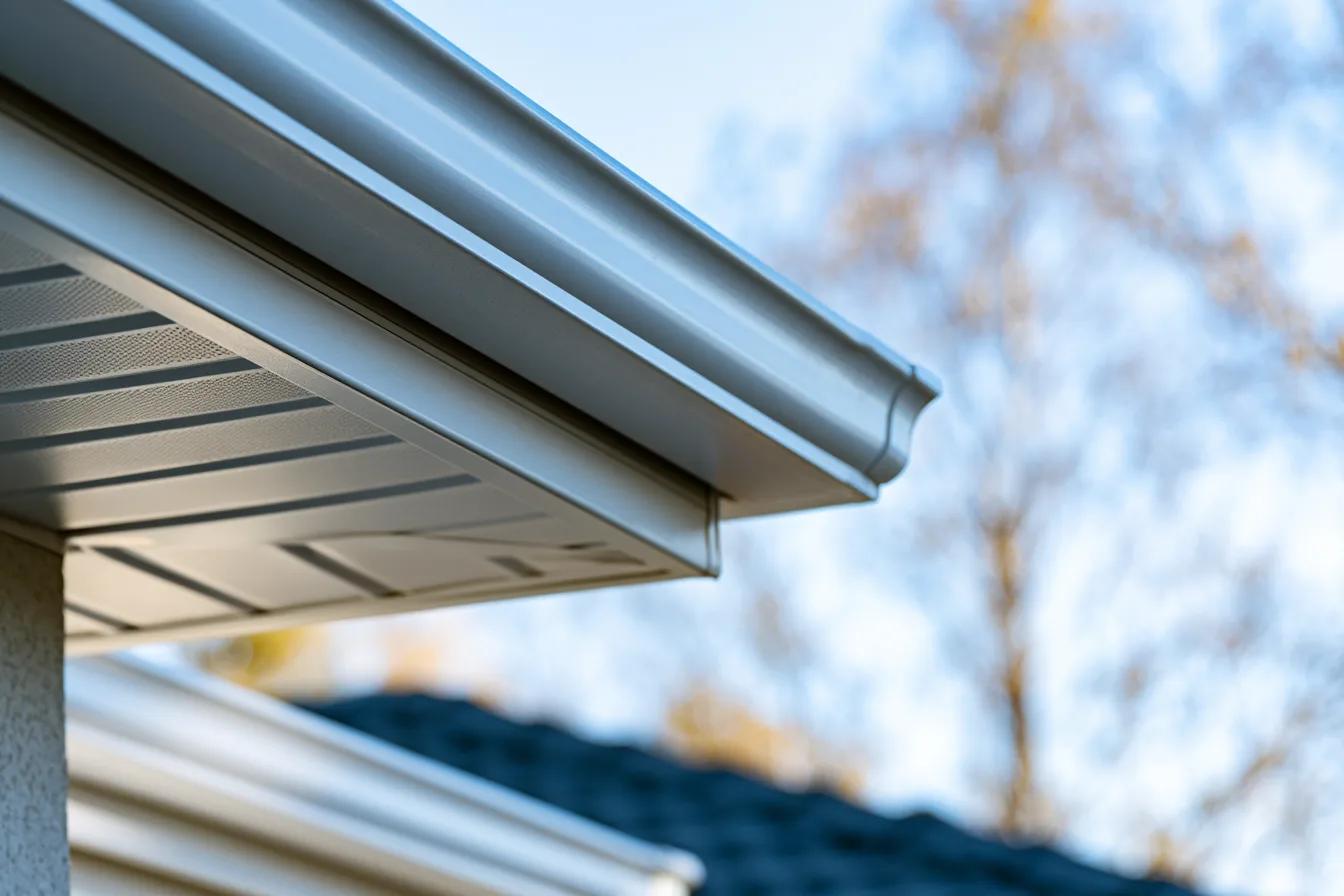
A few inches of rain on an ordinary roof produces several thousand gallons of runoff. The roof's job is to shed it. The gutters decide where all of it lands afterward, and on a Fate lot that second question matters more than it would somewhere with sandy soil and a basement.
Most gutter calls here are one of three things: a run that spills over in every heavy downpour, a run that has come loose from the fascia, or a house that never had enough downspouts to start with. The fix ranges from resetting hangers to forming a whole new run seamlessly, and which one you need is usually obvious once someone reads the pitch and the outlets. Gutters are also part of the roof edge, which is why the two good moments to deal with them are while the roof is being worked on and right after a storm that dented them.
What to look for
Streaks on the fascia and a sag in the middle
These are the tells you can read from the driveway, most of them easiest to see during or right after a hard rain.
Water sheeting over the front edge
A gutter running like a waterfall in a downpour is clogged, pitched wrong, or too small for the roof feeding it. The trenched mulch and the splashed siding underneath are the evidence that stays behind after the rain stops.
Gray vertical streaks on the gutter face
Water wicking over the lip drags grime down the outside with it. Striping is an overflow story rather than a dirt story, and it points back at the same three causes.
A dip in the middle of a run
Hangers pulling loose, or the fascia board behind them going soft. Gutters hung on wood that has been soaking for years pull free again no matter how carefully they are reset, so the board is what gets checked first.
Standing water days after the rain
Lost pitch or a blocked outlet. The weight of the trapped water then deepens the sag, which traps more water, and eventually that section comes down on its own schedule.
Splash-out at a valley and a stained soffit
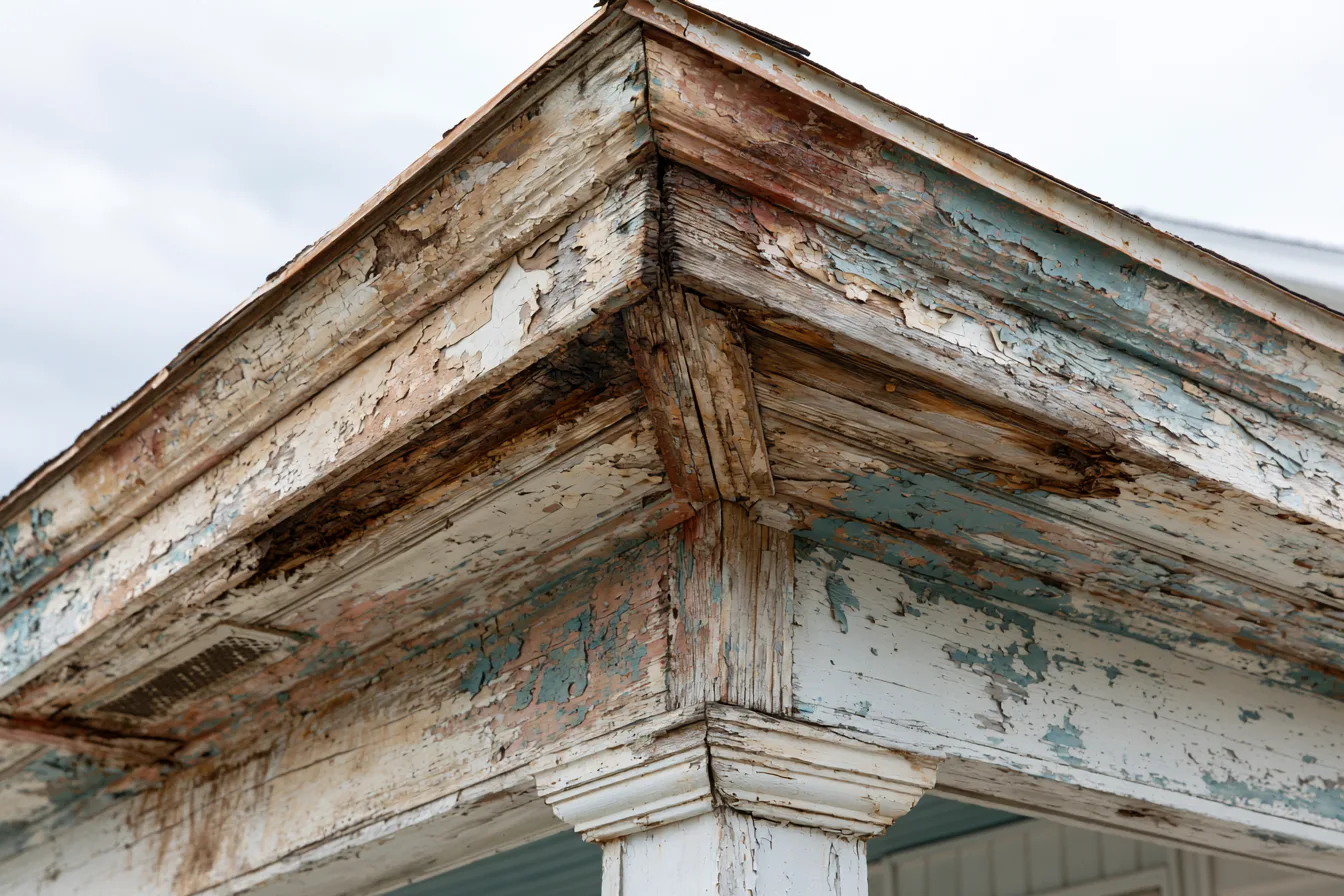
Two roof planes emptying into one short section overwhelm it, and the overshoot lands on the fascia and soffit below. Peeling paint and a dark corner up there are usually a water story, not a paint story.
Two or three of these together point at the drainage system rather than at a cleaning schedule.
What a proposal should settle
Seamless runs, hangers and outlets on a Fate house
Gutters get quoted by the foot, which hides most of the decisions. These are the ones that determine whether the new run works better than the old one.
- Seamless versus sectional
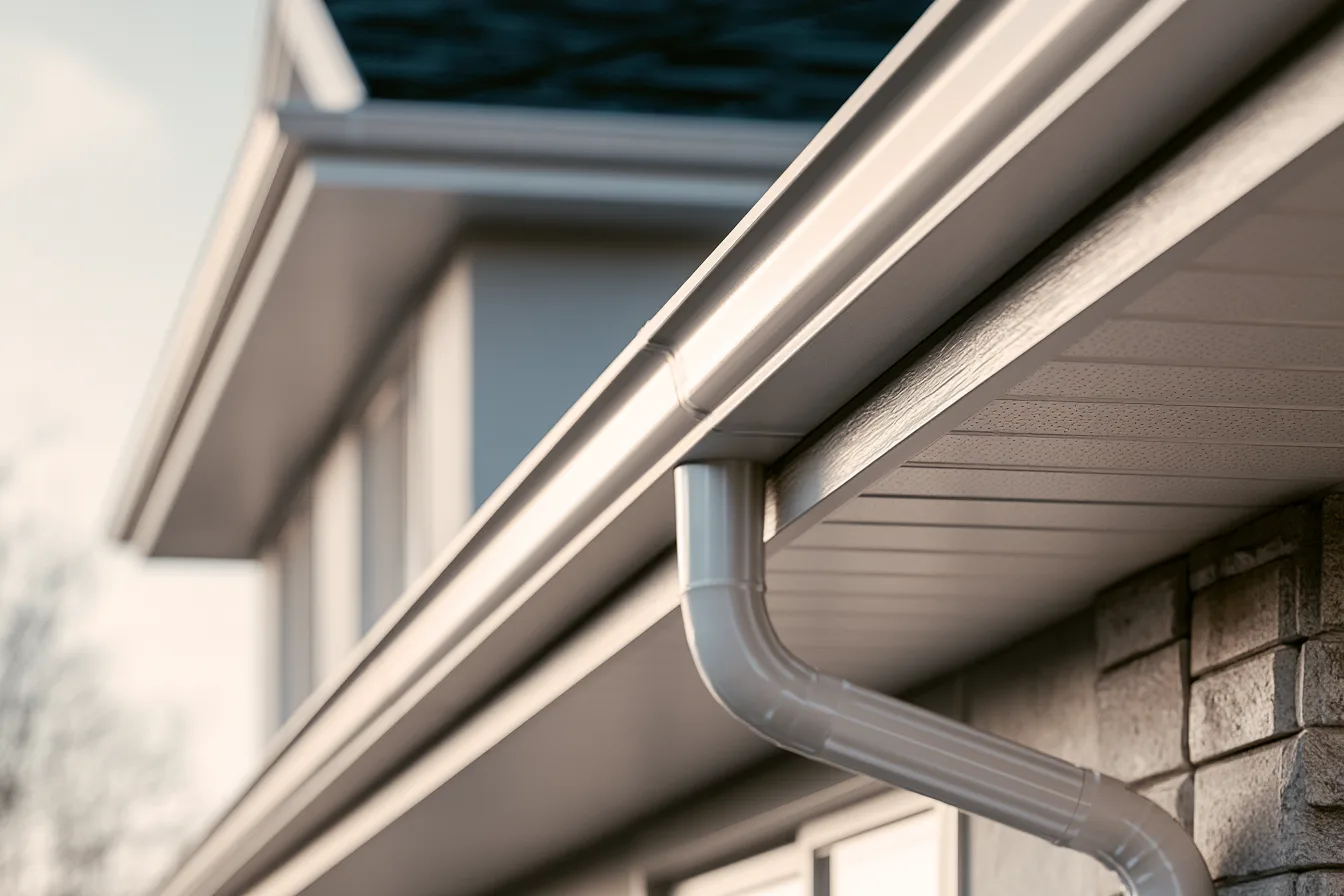
Seamless gutter is roll formed on site from a coil, so each run is one piece with joints only at corners and outlets. Sectional comes in stock lengths joined every ten to sixteen feet, and every joint is a future drip. Sectional is a legitimate budget option; seamless is the default for replacement work.
- Size and thickness
Five inch K style handles most ordinary roofs. Six inch earns its place on large, steep or cut-up roofs, which describes plenty of Fate two-stories, and North Texas rain tends to arrive as short violent bursts rather than all-day drizzle, which is exactly what sizing keys off. Aluminum thickness matters too, since the heavier coil resists ladder dents and hail far better.
- Hangers and pitch
Hidden hangers screwed into sound fascia hold better than the old spike and ferrule, and the run needs enough fall toward its outlets to actually drain. Both are judgment calls made on the wall rather than choices out of a catalog.
- Downspouts and where the water lands
Downspouts are half the system, and a large gutter with one small outlet still overflows. Roughly one downspout per thirty to forty feet of run is the common rule of thumb, closer together in heavy rain areas, and each discharge needs an extension or splash block that carries the water well clear of the house.
- Guards, described honestly
Screens, mesh and micro mesh all reduce how often you are on a ladder. None of them eliminate it. Debris still mats on top, fine grit still works through, and no guard rescues a gutter that is undersized or pitched wrong. Anyone promising maintenance free is selling rather than explaining.
- Drip edge and gutter apron
The metal at the roof edge has to hand water off the shingles and into the trough instead of behind it. That handoff is easiest to build correctly while the roof is open, and getting it wrong is a common reason a brand new gutter still drips down the fascia.
Water, clay and the slab
North Texas sits on clay soils that swell when they get wet and shrink when they dry out. That is not a roofing claim, it is why so many houses here are built on slabs and why watering the foundation is ordinary local conversation in August. What roof drainage has to do with it is simple. A downspout emptying at the corner of the slab puts hundreds of gallons into one patch of soil, over and over, while the ground ten feet away stays dry.
Model building codes treat roof drainage as a foundation matter for that reason. Where expansive soils are present they generally call for roof water to be discharged well away from foundation walls or into an approved system, and adopted editions differ by city, so treat that as something to verify locally rather than a rule to quote.
None of this makes a gutter contractor a foundation engineer, and existing movement in a slab is a conversation for someone who does that work. What gutters can do is stop adding to the problem: catch the runoff, carry it to the ends of the runs, and put it out on ground that slopes away.
- Extend the downspouts past the flower beds rather than stopping at a splash block against the wall.
- Watch where the water actually goes during the first hard rain after any gutter work.
- Keep the grade falling away from the house. A good gutter emptying into a low spot has not solved much.
Timing
Gutters during a roof replacement or after hail
Gutter work pairs with a re-roof for better reasons than the crew already being there. Tear-off is hard on old gutters: debris, ladders and dropped shingles land in them, and a run near the end of its life rarely improves. More to the point, the roof edge is only open once, so drip edge, gutter apron and any soft fascia can be built right instead of worked around later. If a roof replacement is on the horizon, decide the gutters at the same time rather than paying twice for the same edge.
After a storm, the gutters are evidence. Aluminum dents at hail sizes that also bruise shingles, so dented gutters, downspouts and vent caps are often the clearest sign of a hail date visible from the ground, and piles of granules at the outlets say the shingle surface took a beating. Dented gutters commonly ride along on the same claim as the roof, although cosmetic damage terms vary by policy. The page on hail and storm damage covers what that inspection looks for.
See roof replacement
Gutter questions in Fate
Do I need six inch gutters, or is five inch fine?
Five inch handles most ordinary roofs. Six inch is worth it when the roof is large, steep or cut up, when several planes drain into one run, or when the five inch you have overflows in every heavy rain. It carries substantially more water and costs little extra at installation, while retrofitting later means new outlets and downspouts too.
Are gutter guards worth the money?
They are, as long as you know what you are buying: fewer trips up a ladder, not none. Fine mesh stops the most and costs the most. Screens keep leaves out and let grit through. Foam inserts break down in Texas sun and can end up adding to the clog they were meant to prevent. No guard rescues a gutter that is undersized or pitched wrong, so fix that part first.
Can a sagging gutter just be reattached?
Sometimes. If the hangers pulled out of sound wood, resetting them properly is a real fix. If the fascia behind has gone soft, new fasteners will pull out again within a season, so the board gets replaced first. That is why gutter and fascia work usually get quoted together, and why a roof inspection often catches soft fascia before you notice the dip from the driveway.
My gutters were dented by hail. Does that count as damage?
Dents are the most visible hail evidence on a house, and they usually mean the roof took the same hits. Whether the gutters themselves get paid for depends on the policy, because dents that do not stop water from flowing may be treated as cosmetic. Either way it is a reason to have the roof looked at and not only the gutters. Ask for both to be documented while the evidence is fresh.
Fate Roofing Co
Tell us about your gutters
The address, which runs give you trouble, and what happens during a hard rain. Photos of the overflow or the sag help a lot, and if the roof is due around the same time, mention that too.
(945) 307-7600