Fate, Texas · Inspections and maintenance

Commercial roof inspections and maintenance in Fate, TX

A commercial roof gives plenty of warning before it costs real money. Somebody just has to be up there looking. Two scheduled visits a year, a look after the storms and a file you can hand to the next manager is the whole program.

For owners and property managers who would rather plan the roof than react to it.

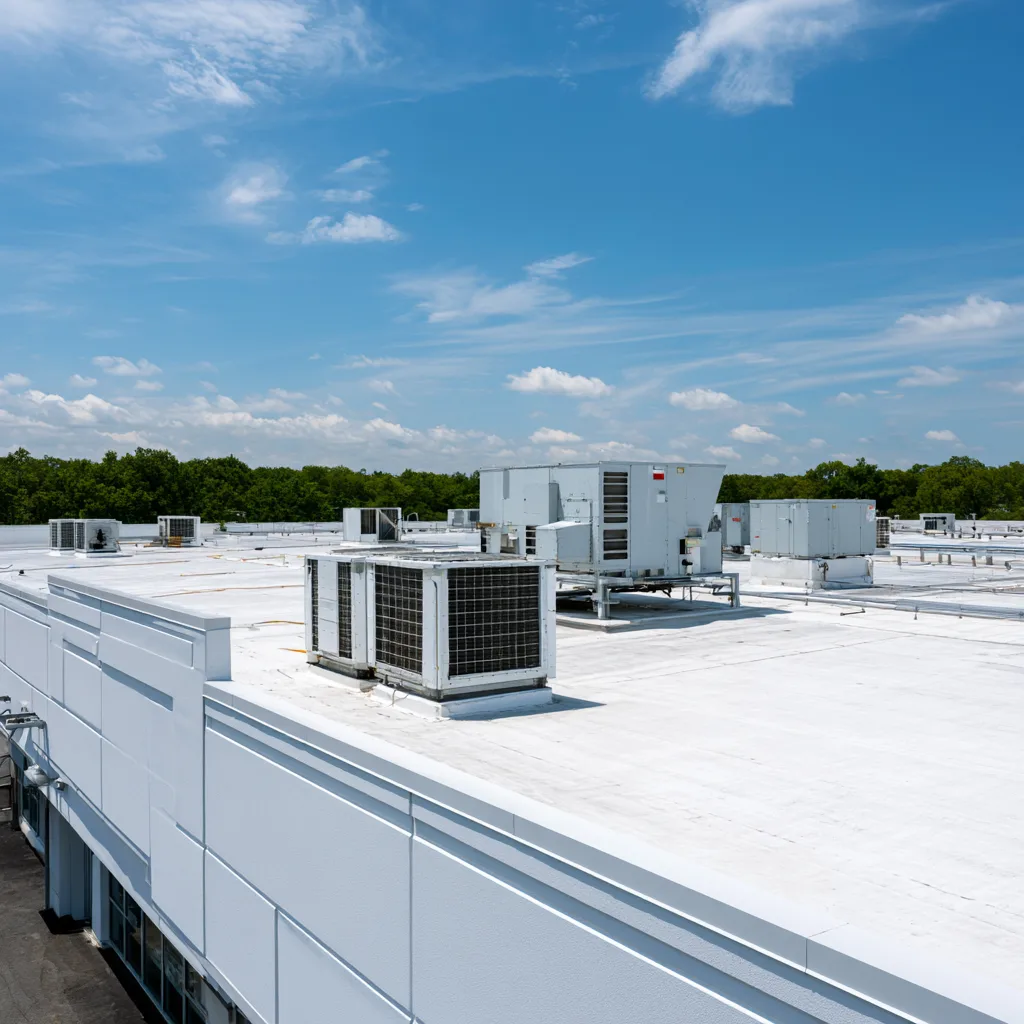
Low sun over a broad white commercial roof with mechanical units

Tell us about your roof

Start with the property and the roofing help you need.

Add project details or email (optional)

Owners and property managers

Commercial roof inspections and maintenance for Fate buildings

A lot of Fate’s commercial roofs are going to be young for a while. Lafayette Crossing, Fate Yards and the pad sites going in around FM 551 will all start on a first membrane, and a first membrane is the cheapest roof there is to keep. The expensive roofs are the ones nobody looked at until a tenant called about a ceiling tile.

If you took over a building and inherited a roof with no history, that is a normal starting point here rather than a failure. One inspection gives you the system, the approximate age, the condition and a punch list ranked by urgency. What happens afterward, twice a year and after the storms, is what decides whether the roof reaches the far end of its range or the near end.

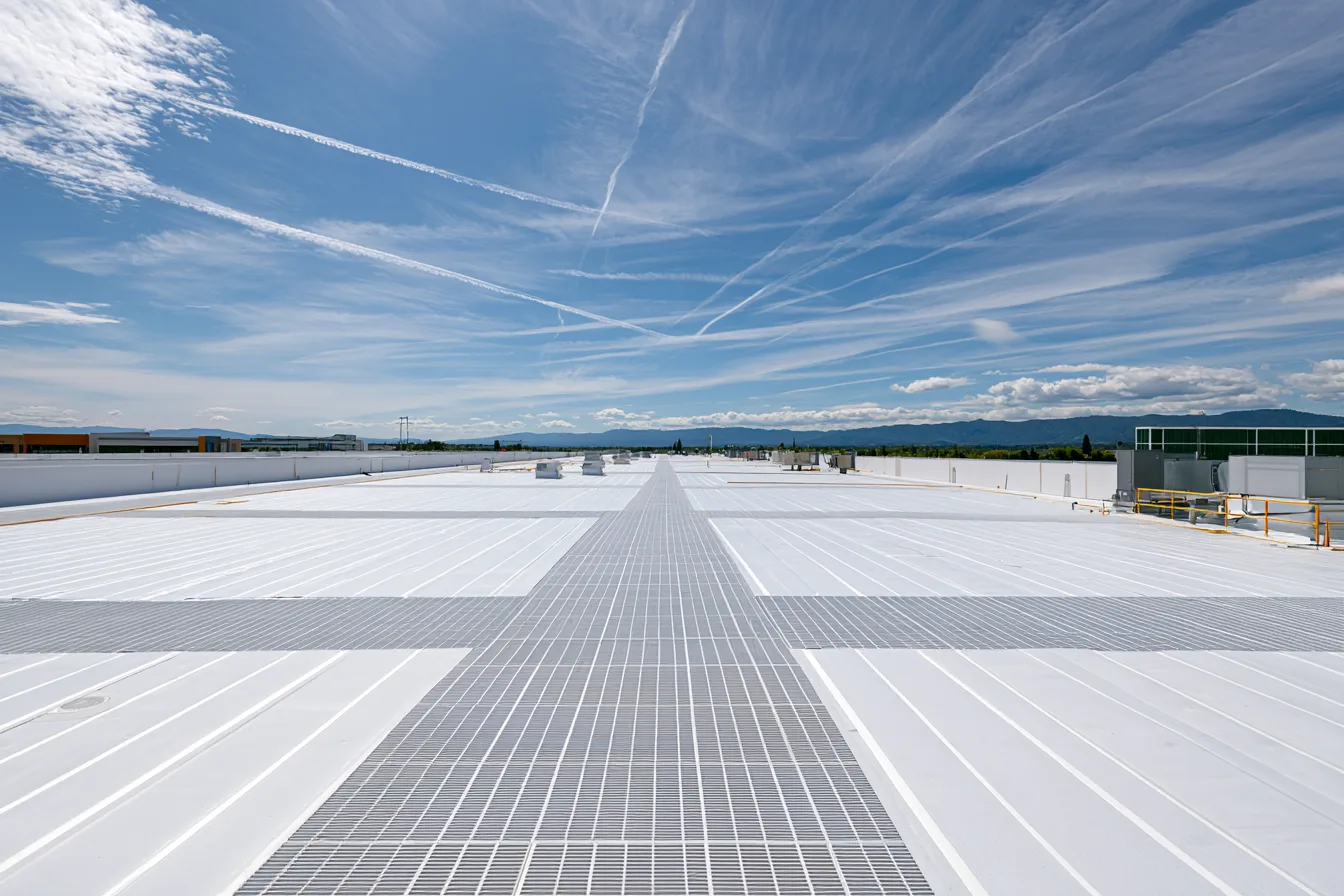
Walkway pad path leading across a white flat roof under a dramatic sky
Walk pads across a white membrane. The path people actually take is rarely the path the pads cover.

The report you should get back

What a low-slope inspection checks

A useful inspection is not a walk and a verdict. It is a set of checkpoints, photographed, with a punch list and a note about what can wait.

Seams and the open field

Laps probed by hand along their length, blisters, splits, shrinkage at corners and any area that feels soft underfoot. Soft is the word that changes a report, because soft usually means wet.

Flashings and terminations

Base flashings at walls and curbs, coping joints, termination bars, and sealant that has cracked or pulled back. Most of the punch list comes from this line.

Drains, scuppers and low spots

Strainers in place, bowls clear, overflow openings unobstructed, and the dirt rings and water lines that show where the roof has been holding water since the last rain.

Penetrations and equipment curbs

Pipe boots, vents, pitch pans, gas lines sitting on blocks, conduit lying directly on the membrane, and condensate lines discharging onto the roof surface.

Equipment and traffic wear

Rooftop units with panels missing or access doors left open, refrigerant lines dragging across the sheet, and the routes service crews actually walk, which are rarely the ones the walk pads cover.

The inside of the building

Ceiling stains, rust on deck flutes, damp insulation in the plenum and the complaint history from tenants. A roof report is not finished until it accounts for what the building is already telling you.

Spring, fall and after the storm

Three looks a year is the working rhythm for a commercial roof, and the third one is not on a calendar. The Fate storm history carries the dates that have actually mattered for this city, and a report near the building is reason enough for a visit.

Spring, once the storm season eases

The most valuable look of the year. North Texas takes its hail and wind in spring, and a spring inspection catches what the season did while the damage is still a patch and while a claim, if there is going to be one, is still timely.

Fall, before the wet months

Drains and scuppers cleared of the year’s leaves and debris, sealant checked before the cold arrives, and anything the summer heat opened up closed back down before the winter rains find it.

After a dated storm

Within a few weeks of hail or high wind near the building. Membrane damage does not announce itself, and both insurers and manufacturers care about how promptly it was reported. Dated photographs are the point of this visit.

The cheap half of the program

Small maintenance that prevents big leaks

None of these are roofing projects. They are the reason a roof reaches the far end of its life and the reason a punch list stays short. When one of them turns into an actual opening, it becomes flat roof repair, and it is far cheaper in the week it is found than in the year it is discovered.

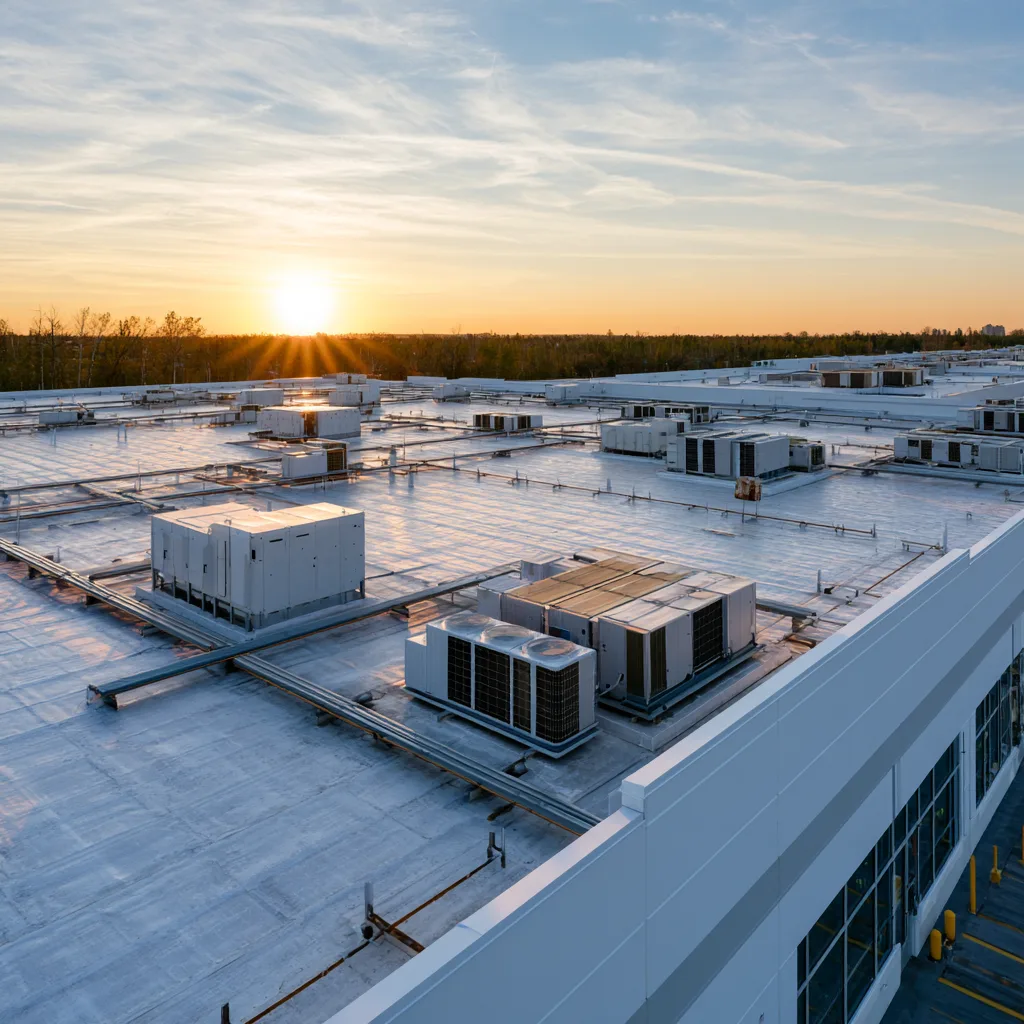
Rows of HVAC units across a large white commercial roof
  • Keep the drains clear

    Twice a year, plus after any storm that brings branches down. A blocked drain turns an inch of rain into days of weight the roof was never asked to hold.

  • Look at the roof after other trades leave

    The most common new damage on a commercial roof arrives with somebody else’s work order. Dropped screws, cut line sets, a panel left leaning on the membrane, a condensate line pointed at a seam, a torn walk pad. Someone should go up after HVAC service.

  • Top up sealant and pitch pans

    Sealant is a maintenance item with a shorter life than the roof it protects. Pitch pans in particular shrink and need refilling. They are cheap to keep and costly to ignore.

  • Cut back the overhang and clear debris

    Branches over a roof mean abrasion and clogged drains. Leaves and trash packed around curbs hold moisture against the flashings that are least able to take it.

  • Control who goes up there

    Walk pads on the routes people actually use, a log of roof access, and a hatch key that lives with somebody who knows to ask what the visit is for.

Keep a roof file

The single most useful thing a property manager can do for a roof costs nothing at all. Keep a file, and keep it where the next manager will find it.

In it: what the roof is and when it went on, the original proposal and any drawings, the manufacturer warranty documents and the conditions attached to them, every inspection report with its photographs, every repair invoice saying what was fixed and exactly where, and the dates of storms that passed over the building. If half of that does not exist yet, start the file with the first inspection and build from there.

It earns its keep twice. Manufacturer programs generally carry conditions about maintenance and prompt reporting, and the file is what shows those conditions were met. And when something does happen, dated photographs from before the event plus a repair history that shows the roof was cared for put you in a conversation about a storm on a known date rather than a conversation about deferred maintenance.

Budgeting for the roof’s life

A roof is a capital asset with a fairly predictable arc, and these three lines are the whole budget. The mistake is rarely underfunding one of them. It is not knowing which stage the roof is in, which is exactly what an inspection tells you. Restoration with roof coatings is the middle step, and it only exists while the roof underneath is still dry.

Maintain

A small annual line: two inspections, drain clearing, sealant, minor repairs as they come up. It is the cheapest money the roof will ever take, and most manufacturer programs expect it anyway.

Restore

One larger project in the second half of the roof’s life, while the insulation is dry and the deck is sound. It costs a fraction of a replacement and pushes the replacement year further out. Miss the window and the option quietly closes.

Replace

A reserve you build toward with a date attached rather than a surprise in a bad quarter. Each year’s inspection moves that date by a year or two in one direction, which is precisely what a capital plan needs to know.

Commercial inspection questions in Fate

How often should a commercial roof be inspected?

Twice a year, plus after any storm that passes over the building. That rhythm fits North Texas well, because the hail risk clusters in spring and the debris arrives in fall. A new roof under warranty and an older roof you are nursing along both benefit from the same schedule, for different reasons.

Is a maintenance visit the same thing as an inspection?

Not quite. An inspection produces a report: condition, photographs, a punch list and a view on where the roof sits in its life. A maintenance visit does the small work, clearing drains, sealing terminations, resetting a walk pad. Most buildings want both, and they often happen on the same trip.

The roof is still under warranty. Do we really need this?

More than usual, actually. Manufacturer programs generally require that the roof is maintained and that damage is reported promptly, and unreported damage or work done by another trade is a common reason coverage gets questioned. Those conditions belong to the manufacturer and the installing contractor, so read the documents you were handed and keep the records they ask for.

We just bought the building. Where do we start?

With one inspection that establishes the roof’s identity: system, approximate age, condition, moisture where it can be seen or scanned, and a punch list in order of urgency. That report becomes the first page of the roof file and the basis for the budget. If it turns up wet insulation or a second layer, the conversation moves to the commercial roofing options rather than to a maintenance schedule.

What do you need to set up the first look?

The address, what the building is used for, roughly how big the roof is, how to get on it, and any leak or repair history you have. If there are tenant hours or an alarm to work around, say so. The first visit ends with a report in your hands.
Fate Roofing Co

Set up a look at the roof

Send the building and how to get on the roof. If you have a history for it, send that too. If you do not, that is the first thing an inspection gives you.

(945) 307-7600

Tell us about your roof

Start with the property and the roofing help you need.

Add an email address (optional)

Call (945) 307-7600Request roofing help