Fate, Texas · Roof leak repair
Roof leak repair in Fate, TX
Water is coming in and the stain grows a little every time it rains. The most useful thing to know first is that the opening in your roof is almost never directly above the mark on your ceiling, which is exactly why so many leaks get sealed twice and still leak.
Where leaks start on newer Fate homes, what to do tonight before anyone can get up there, and how a source gets traced instead of covered over.
Follow the water
A leak in a Fate home
Water gets through the roof at one point, lands on the underside of the decking or on a rafter, and then it travels. It runs down the slope of the wood, crosses a truss, tracks along a wire or a duct, and finally drops through the ceiling wherever gravity wins. That is why the stain in your hallway can sit six or eight feet from the actual entry, and why sealing the shingles directly above the stain so often accomplishes nothing.
So the first job is not repair. It is tracing. Somebody goes into the attic, follows the wet path back uphill to the highest point that is wet, and only then goes on the roof to look at what is above it. Once the entry is known, the fix is usually small and usually cheap.
On a Fate house that entry point is rarely the shingles themselves. It is one of a short list of details, and most homes here are young enough that the list is predictable.

The usual suspects
Where the water usually gets in
Most homes here are five to twenty years old, which puts them in a narrow window of likely causes. Roughly in the order they show up:

Pipe boots
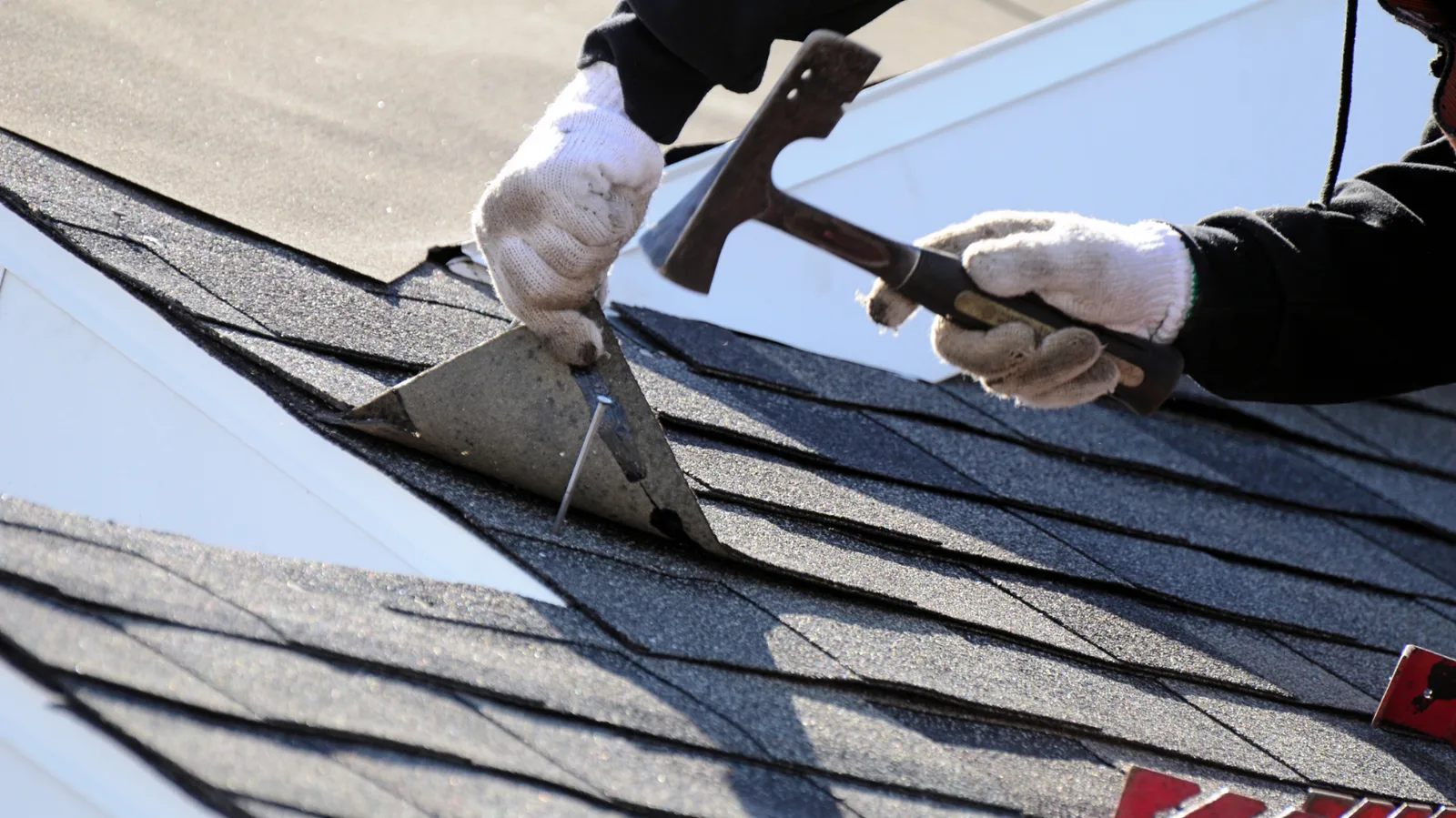
The rubber collar around a plumbing vent. Sun dries it, it splits at the top, and water runs down the outside of the pipe into the attic. It is the most common leak on a young roof and among the cheapest to fix. If the stain is near a bathroom or the kitchen, look here first.
Wall and chimney flashing
Where the roof meets a wall, metal does the waterproofing and sealant only finishes it. When step flashing was installed short, or counter-flashing has pulled out of the chimney mortar, water comes in behind the brick and shows up in the ceiling several feet away.
Backed-out nails
A nail that backs out pushes up the shingle over it and leaves a raised spot the wind can get under. Ordinary rain passes; a driving rain finds the hole. From the attic, a rusted nail tip with a dark ring around it gives it away.
Valleys
The seam where two slopes meet carries the most water on the roof. Leaves and grit pack in, water backs up under the shingle edges, and a valley that behaved for years starts leaking in heavy rain only.
Anything mounted through the roof
Satellite dishes, solar attachments and abandoned mounts left behind when a service was cancelled. Each is a hole whose watertightness depends on how it was sealed and how long ago. Dead dish mounts are a regular find on roofs of this age.
A leak that appears in a hard, wind-driven rain and stays dry in a gentle one usually points at flashing or a fastener rather than an open hole. Worth telling whoever comes out, because it narrows the search.
What to do tonight
Nothing on this list involves a ladder. A wet roof after dark is how people get badly hurt, and there is nothing up there tonight that cannot wait for daylight and somebody with fall protection.
If a storm caused it, tonight’s photographs matter twice over. Your policy asks you to take reasonable steps to prevent further damage, and reasonable temporary costs are generally covered on a covered loss, so keep the receipts. Permanent repairs normally wait until the adjuster has looked, and damaged material stays put until disposal is approved. The roof insurance guide walks through that order of operations.
- Move what you can out from under it. Furniture, electronics, rugs, anything on the floor beneath the stain.
- Catch the water. A bucket with a towel in the bottom cuts the noise, and swap it before it overflows.
- If the ceiling is bulging, drain it deliberately. A sagging drywall bubble can hold gallons. With a bucket underneath, put a small hole in the low point and let it out on your terms.
- Kill the power to that area if water is near a light fixture, a fan or an outlet.
- Photograph everything before you clean up: the ceiling, the wet floor, the contents, the outside of the house. Photos taken tonight are worth far more than photos taken next week.
- Leave the wet drywall alone for now if a claim is even possible.
Diagnosis before repair
Finding the source, then fixing it
A leak visit that starts on the roof is guessing. One that starts in the attic is diagnosing. Here is what that difference looks like, and what separates a real repair from a cover-up.
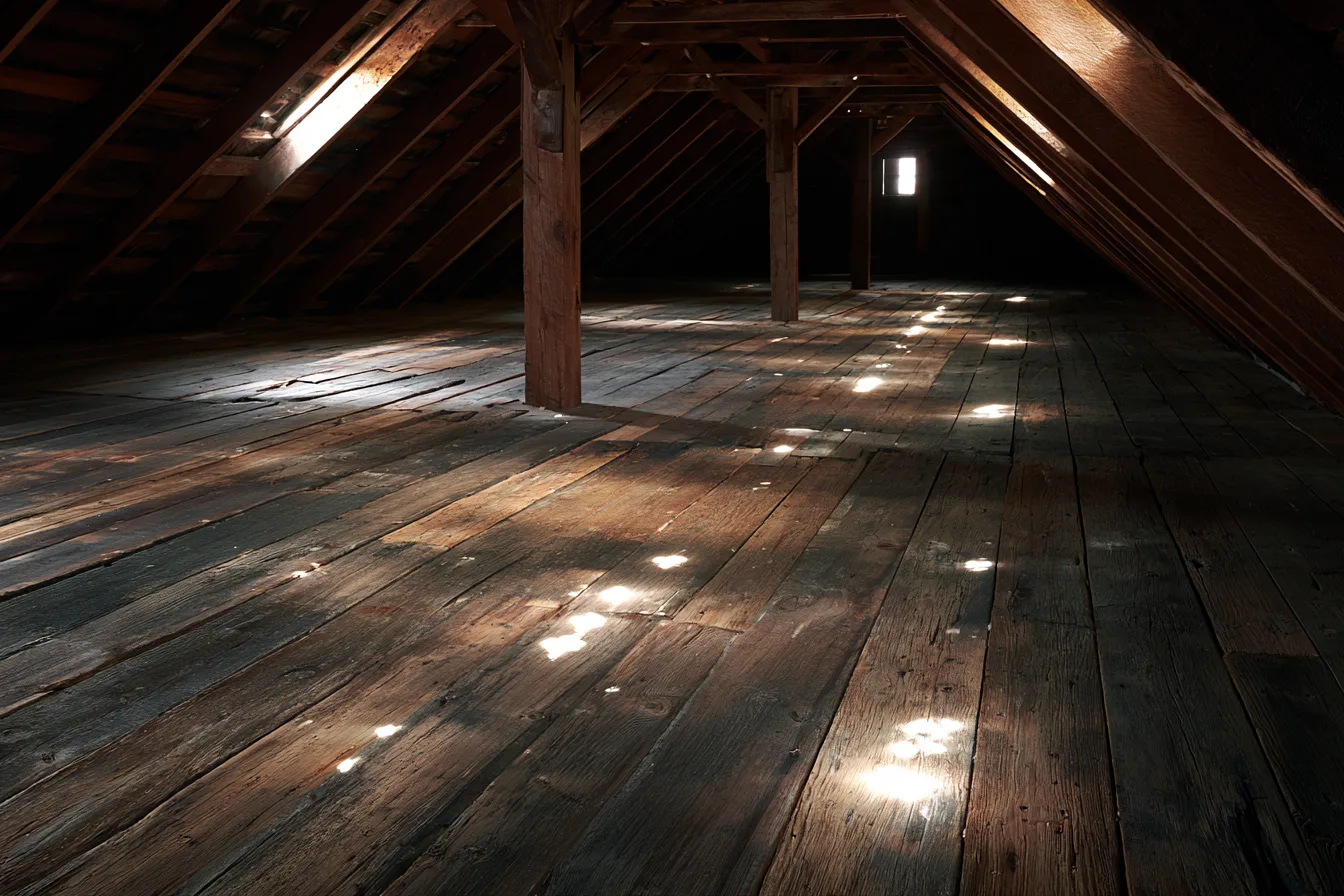
- The attic first, with a light
Wet or stained decking, dark streaks down a rafter, rusted nail tips, damp compressed insulation, and daylight where there should be none. Because the wet path runs downhill, the highest wet point inside is the closest thing to the entry outside.
- Then the roof, measured to that spot
Distances taken off a reference the attic gave up, a vent stack or the chimney, so the search happens where the water entered rather than where the stain landed. Boots get flexed, flashing gets probed, shingles get lifted.
- A water test when it is not obvious
A hose run on the roof in sections, low to high, with somebody watching inside. It is how an intermittent leak gets caught, and it takes patience, because water can take twenty minutes to travel and show. Rushing the test is how you get a confident wrong answer.
- A fix matched to the source
A split boot gets a new boot, not a smear. Short step flashing gets rebuilt with the shingles woven back around it. A backed-out nail gets pulled, the hole sealed and the shingle re-set. A packed valley gets cleared and the metal underneath checked.
- What sealant cannot do
Caulk is a finishing material, not a repair. On a joint that has moved or a component that has failed, it holds for a season and then splits along the same line. If someone’s answer to a leak is a tube of sealant and no explanation of what failed, you are buying time and calling it a fix.
If the decking under the leak has gone soft, that sheet gets replaced before anything goes over it. Sheathing that has been wet for a season does not dry out and turn back into sound wood.
When the date matters
Leaks after hail and wind
A leak that starts in the days after a storm is a different conversation from one that has been coming on for a year. Hail can crack a boot or split a shingle that then only leaks in the next heavy rain. Wind can break the seal on a row of tabs so water drives underneath without a single shingle looking out of place from the street.
That timing changes two things. It changes what a roofer looks for, because storm damage shows up as a pattern across a slope rather than as one failed detail. And it can change who pays, since wind and hail are standard covered perils while age and wear are not. If your leak followed a storm date, hail and storm damage covers what that damage looks like and how the claim side works.
Check the Fate storm record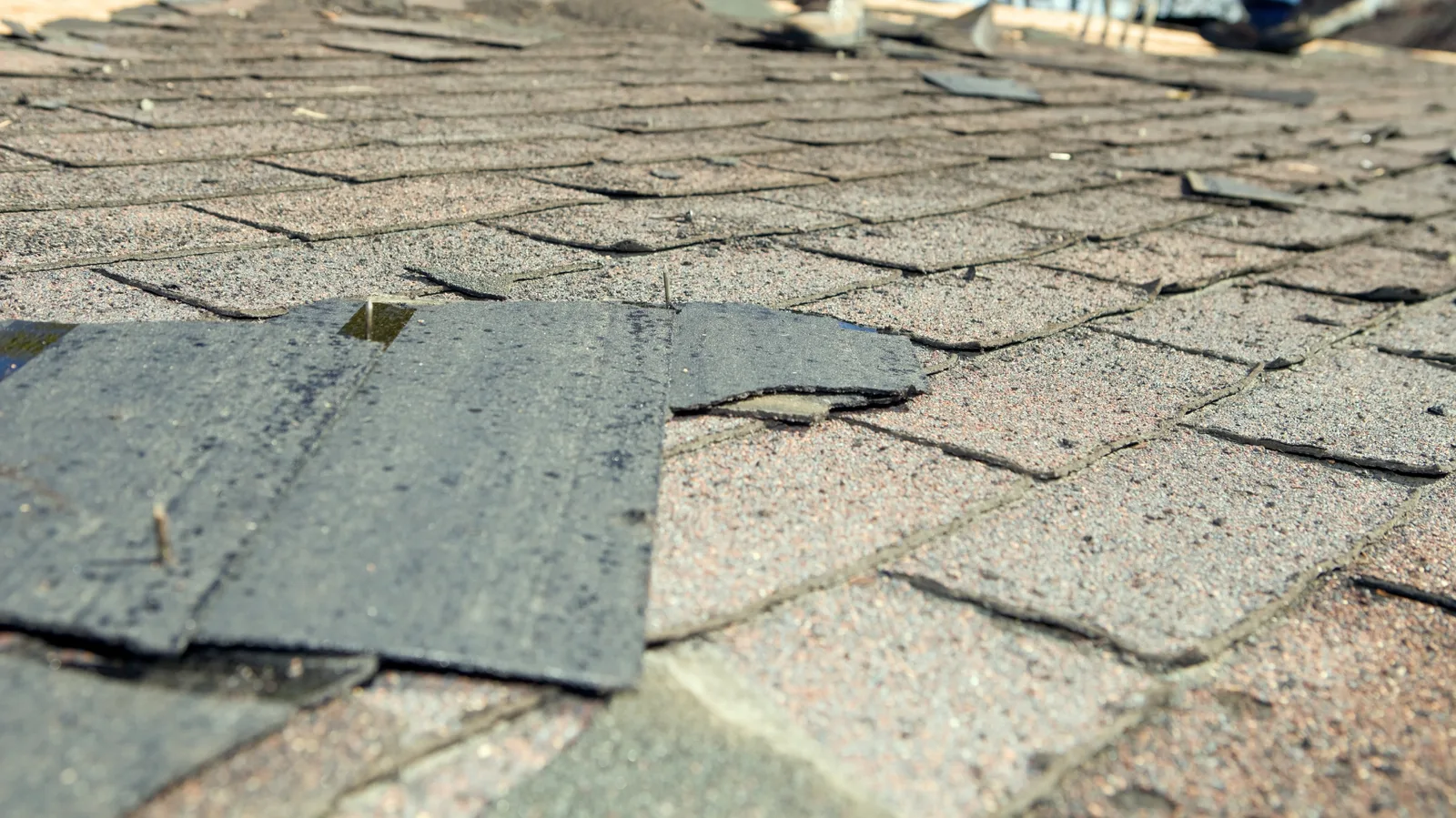
Roof leak questions in Fate
The stain is dry now. Do I still need it looked at?
Yes. A stain that dried means the rain stopped, not that the leak did. The opening is still there and the next storm will use it again. Meanwhile the insulation above that spot has probably packed down and lost most of its value, and wet decking does not recover on its own. Leaks are always cheapest the first time.
Can a leak be fixed while it is still raining?
Temporary protection can happen, a permanent repair usually cannot. Shingles and sealants need a dry, warm surface to bond, and a wet roof is genuinely dangerous to stand on. What is realistic in the rain is containment inside, a tarp over the area once it is safe to get up there, and the actual repair scheduled for the first dry day.
How much does a roof leak repair cost?
It depends on what failed and how far into the roof the fix has to go. A cracked boot is at the small end. Rebuilding chimney flashing or a valley is well above it, and finding wet decking adds material and labor. Nobody can price that honestly over the phone. What you should get is the source named, the work described and the number written down before anything starts. If the repair list keeps growing, roof repair explains where the repair conversation turns into a replacement one.
The same leak came back after it was repaired. What now?
Usually one of two things. Either the symptom was sealed and the source was never found, or there are two entry points feeding the same stain, which is common where a wall flashing and a nearby pipe boot both drain into one rafter bay. Either way it needs a proper trace from inside rather than another pass with a caulk gun. Send the address, where the water shows up and what was done last time, and the trace starts in the attic.
Fate Roofing Co
Tell us where the water is showing up
Which room, how far the stain sits from an outside wall, when it started and whether a storm came first. That is enough to begin narrowing it down.
(945) 307-7600