Fate, Texas · Metal roofing
Metal roofing in Fate, TX
Metal roofs draw a lot of interest in Fate, and a lot of secondhand information with them: that they are loud, that hail ruins them, that they cost twice what shingles do. Two of those are wrong and one is roughly half right. Here is what a metal roof actually does on a house here, and what it costs against asphalt on the same roof.
Standing seam, exposed fastener panels and metal shingles, with hail and heat behavior and Dallas-Fort Worth planning ranges.
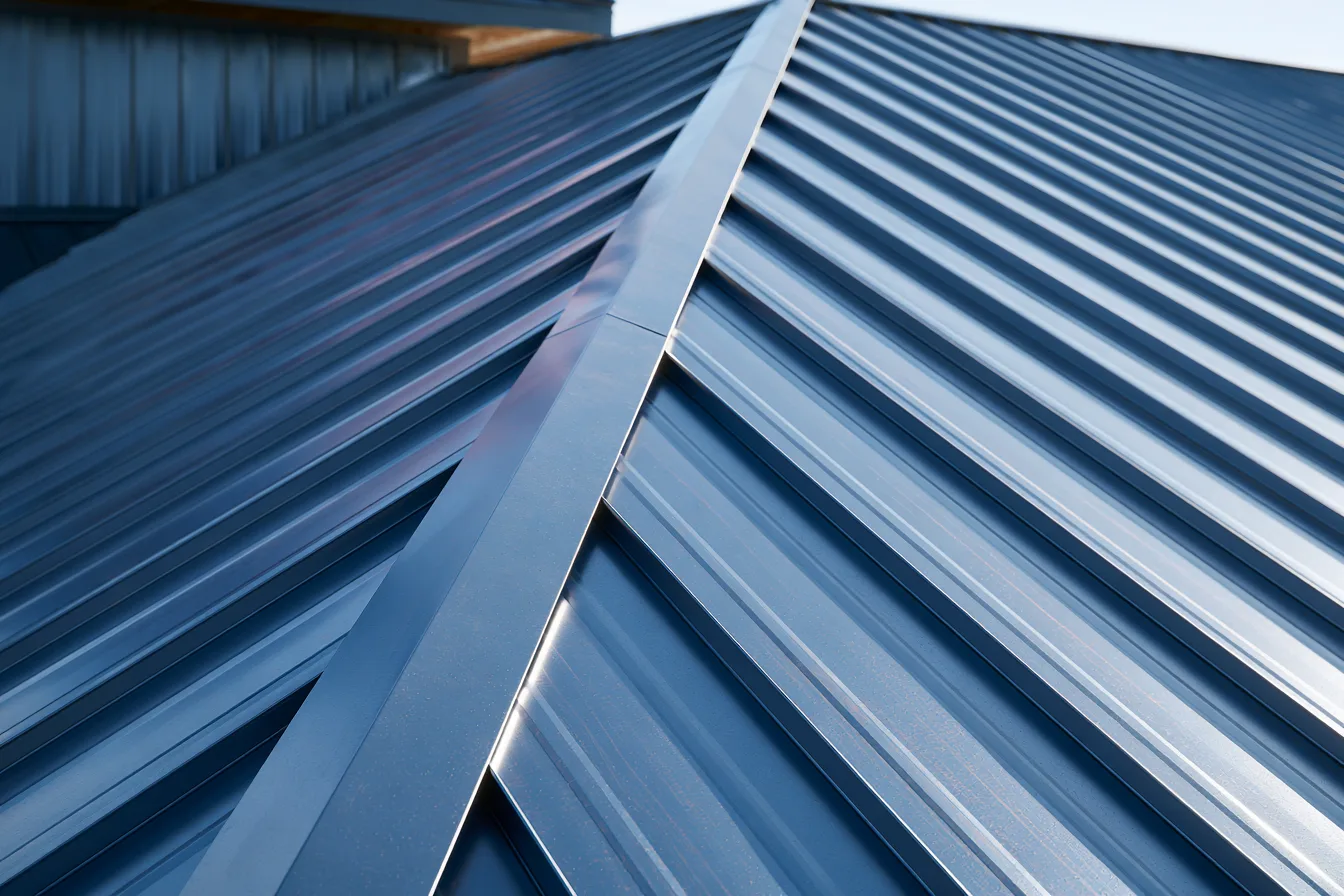
Why people ask
Metal roofing for Fate homes and buildings
Two things bring people to metal in Fate. One is the look, mostly on the farmhouse and modern elevations the newer phases have been building. The other is fatigue: a homeowner who has already replaced one shingle roof and does not intend to do a third.
Both are good reasons, and metal answers them a little differently than the brochures suggest. A standing seam roof is a long-service roof with concealed fasteners and very little to fail at the surface. It is also roughly twice the up-front cost of asphalt on the same roof, sometimes more, and it is installed well by fewer crews, which matters more than which panel you pick.
Metal turns up on porches, additions and detached shops too, where a small area and a visible profile make it an easy call. If the building in question is a shop, a warehouse or a retail bay rather than a house, commercial roofing is the better starting point, because the questions there are drainage, rooftop equipment and keeping tenants working rather than how it looks from the curb.
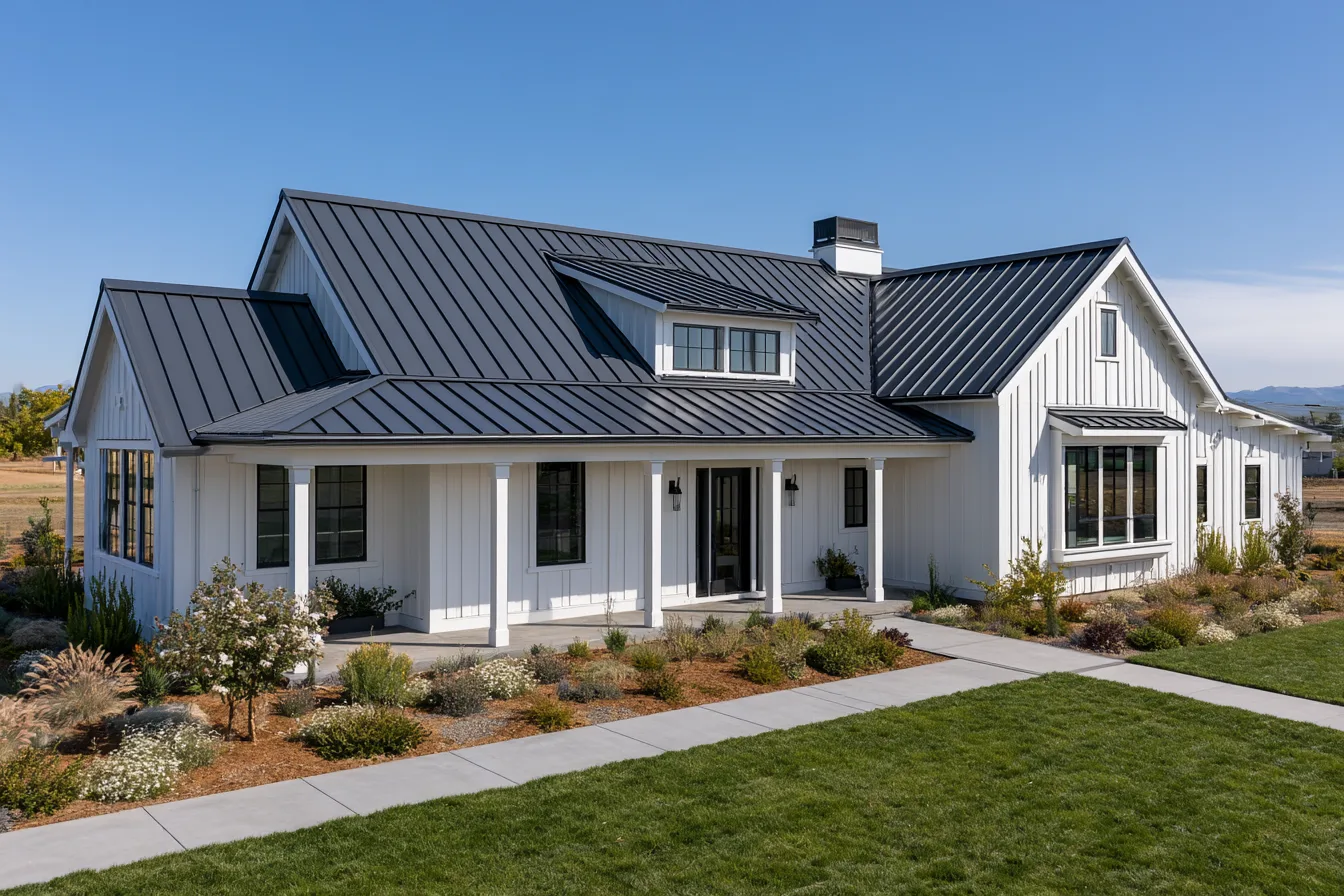
Standing seam, exposed fastener or metal shingles
Three quite different products all get called a metal roof, and they age in three different ways.
Standing seam
Vertical panels joined at raised seams, with the fasteners hidden underneath and usually clipped to the deck so panels can move as they heat and cool. Nothing penetrates the water plane out in the field of the roof, which is why it is the long-service choice. A field study of standing seam systems put their service life past sixty years, with the sealant in the seams, not the panel, as the part that gives out first. The price reflects that.
Exposed fastener panels
Ribbed panels screwed straight through the face, each screw sealed by a rubber washer. Much cheaper, faster to install and entirely reasonable on a shop, a barn or a covered porch. The trade-off is maintenance: washers age in Texas sun and the screws need checking and re-gasketing every several years for as long as the roof is up there.
Metal shingles and stone-coated steel
Panels stamped to resemble slate, shake or tile and installed in courses more like a shingle roof. They suit a house whose lines do not carry long vertical panels well, and an association that will not approve a farmhouse look. Cost usually lands between the other two.
How it actually behaves
Metal in hail and Texas heat
Two questions decide whether metal is right for a Fate house: what happens when hail arrives, and what happens in August. Both have straight answers, and one of them carries an insurance catch worth knowing before you buy rather than after the storm. The roof insurance guide covers the cosmetic damage exclusion that shows up on a lot of metal roof policies.
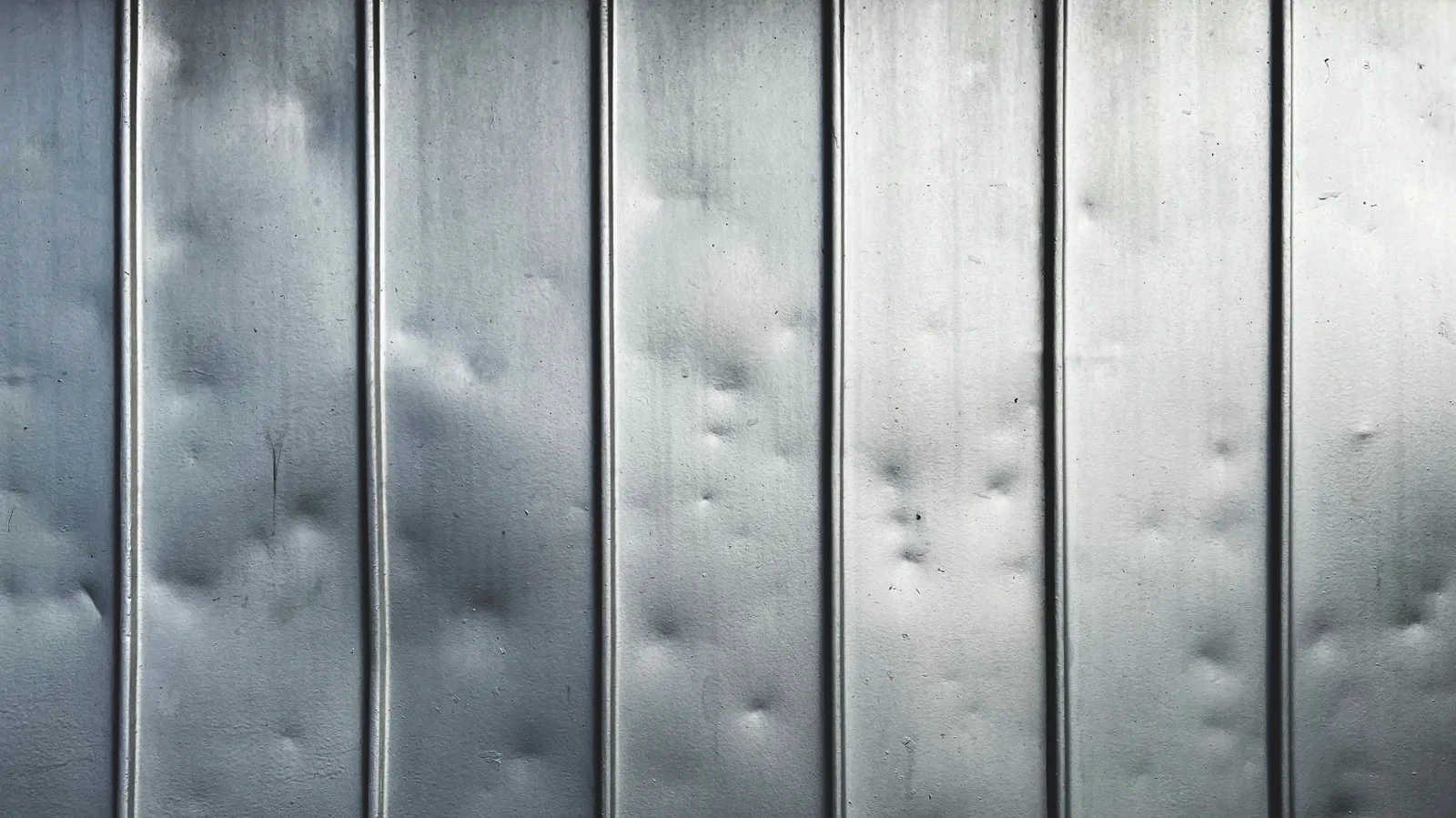
Dents are not leaks
Hail big enough to finish a shingle roof will often dent a metal one without breaching it. The roof keeps doing its job. Whether you can live with looking at it is a separate question, and so is whether your policy will pay to change it.
The cosmetic exclusion
Many policies exclude cosmetic damage, and some carriers add that exclusion specifically for metal roofs. Dents that do not affect performance can end up being yours to keep. Read the endorsement before the roof goes on, not after the next hail date.
Movement is designed in
Metal expands and contracts, and a Texas roof swings a long way between a January night and an August afternoon. Standing seam handles that with clips that let panels slide. On exposed fastener panels the same movement works on every screw, which is why the washers are the maintenance item.
Heat and reflectivity
A light or reflective coated panel sends back a real share of the sun instead of absorbing it, and that shows up as a cooler attic. It is not a substitute for insulation or balanced ventilation, and a dark finish gives some of the benefit back.
The noise question
Metal over open purlins on a barn is loud. Metal on a house sits over solid decking and underlayment, and homeowners generally report that it sounds like a roof. Ask what is going underneath the panels rather than accepting either the myth or a flat denial.
On metal, whether hail damage is functional or cosmetic is a judgment made on the roof. A professional inspection settles it, and reports near a street never prove damage at a particular house.
The comparison people want
Metal against shingles on the same roof
Same Fate roof, priced two ways. Around 2,400 square feet of roof surface covers a typical two-story here once the slopes, the garage and the porch are counted.
These are Dallas-Fort Worth planning ranges with ordinary tear-off included. The roof cost calculator will take your own measurements and pitch if your roof is larger or steeper than the example.
The gap is real, and so is the arithmetic on the other side of it. A standing seam roof that runs forty years or more outlasts two or three asphalt roofs, so the cost per year of service often comes out lower even though the check is much bigger. That only helps if you plan to still be in the house, which is the honest question to settle first.
Compare materials on your roof$19,680 to $35,280
Standing-seam metal · 2,400 sq. ft. of roof surface
$9,840 to $16,560
Architectural shingles · 2,400 sq. ft. of roof surface
A regional planning model, not a quote. Metal is the more sensitive of the two to roof complexity: hips, valleys, dormers and penetrations all add trim and labor that a shingle roof absorbs more cheaply.
Read before you compare
What a metal proposal should name
Metal proposals vary far more than shingle proposals, and two numbers that look comparable can describe very different roofs. These are the lines worth finding in writing.
- Gauge and coating
Panel thickness, where a lower gauge number means thicker steel, and the paint system applied to it. Coating quality is what keeps the color from chalking under North Texas sun, and it belongs in the proposal by name rather than as a swatch.
- Panel profile and seam
Which profile, what seam height, and whether the seams are mechanically locked or snapped together. Those perform differently in wind, and a proposal that will not say which one it is has told you something.
- Clips and fasteners
Concealed clips and how many per panel, or on exposed fastener work, the screw and washer specification. This is the difference between a roof that moves with the weather and one that works its own fasteners loose.
- Underlayment and decking
What goes under the panels, whether a high temperature underlayment is specified, and what happens if soft decking turns up during tear-off. Metal telegraphs an uneven deck in a way shingles forgive.
- Trim and penetrations
Ridge, hip, eave, rake and valley, plus every pipe, vent and chimney that comes through. Trim is where metal roofs leak, and it is where a cheap proposal quietly saved its money.
- Documents at the end
Manufacturer coverage on the panel and the finish, the installer's own workmanship terms, and the product data for what actually went on the house. Those belong to the manufacturer and the contractor doing the work, so ask to see the paperwork rather than a claim about it.
Metal roofing questions in Fate
Will insurance cover hail dents on a metal roof?
It depends on your policy, and this is the one place metal differs meaningfully from asphalt. Dents that do not affect how the roof sheds water are cosmetic, and many policies exclude cosmetic damage, sometimes through an endorsement added specifically for metal. Punctures, split seams and damaged flashing are functional and get treated like any other storm damage. Read that endorsement now rather than later; the roof insurance guide explains what to look for in the policy language.
Can I put metal on just part of the house?
Yes, and it is common here. A metal porch roof, a bay over the entry, or a low-slope section that shingles were never really right for can all be done in metal while the main roof stays asphalt. It needs a deliberate transition detail where the two systems meet, and the colors are worth choosing together rather than one at a time.
Is metal a good choice for my shop or small commercial building?
Often, yes. Exposed fastener panels are the standard on shops, barns and light industrial buildings for good reason: economical, quick to install and well suited to a simple roof shape. Commercial roofing covers buildings where drainage, rooftop equipment and staying open during the work are the real constraints.
Does a metal roof make the house hotter?
Cooler on balance, and mostly through reflectivity rather than insulation. A light or reflective coated panel returns a good share of the sun a dark asphalt roof absorbs, which shows up in attic temperature more than on the thermostat. The attic still needs balanced intake and exhaust either way.
Fate Roofing Co
Ask about a metal roof
Send the address, what is on the roof now, and whether you are looking at the whole house or just a porch or shop. If the comparison with shingles is what decides it, say so and it can be priced both ways.
(945) 307-7600