The first years under a builder roof in Fate
Most houses in Fate are still wearing the roof they were built with. A young roof is not a roof with nothing to think about; it is a roof whose small parts age faster than its shingles. Here is what is usually up there, what tends to go first, and what is worth keeping in a folder.
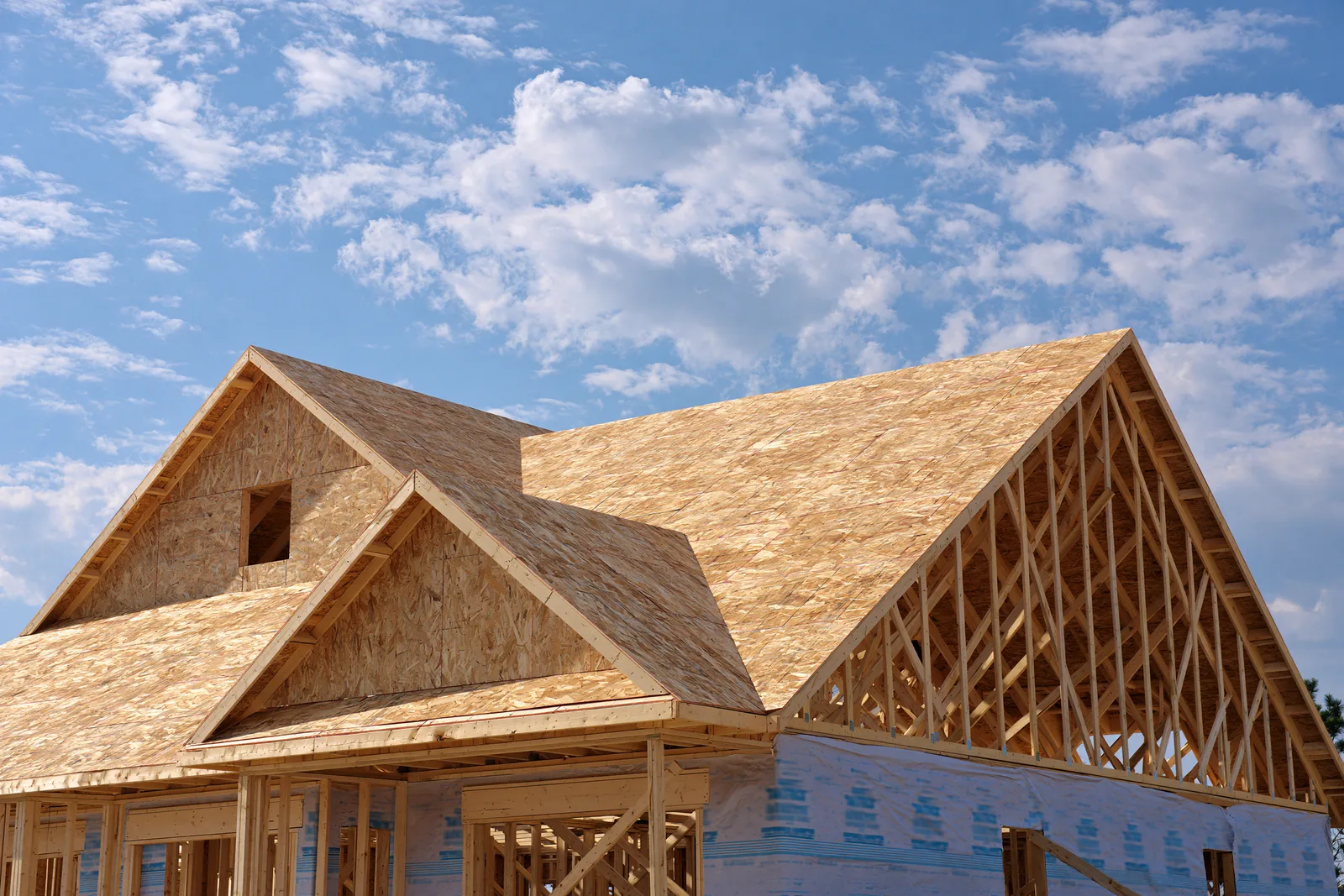
What is usually on a new Fate roof
Neighborhoods here were built in waves. The Williamsburg public improvement districts date to 2006 and 2012, Edgewater came in 2020 and Monterra in 2022, and Woodcreek and the Reserve at Chamberlain grew out of the same 1,700 acres of raw land. Those dates tell you when a neighborhood started, not how old any particular roof is, but they do explain why one street can be on a fifteen-year-old roof while the next one over is barely broken in.
What sits on most of them is broadly the same recipe. Architectural asphalt shingles over synthetic or felt underlayment on OSB decking, with membrane in the valleys and around penetrations where the plan called for it. Painted metal drip edge at the eaves and rakes, rubber-gasket boots at the plumbing vents, step flashing where a slope meets a wall or dormer, and exhaust through a ridge vent or a line of box vents with intake through the soffits.
That is a perfectly good roof, built to a plan and inspected. The variation between houses is rarely in the shingle. It is in the details: whether the valleys are open metal or closed cut, how much intake the soffits actually provide, how the flashing meets brick and stone. Those details are also where a young roof gives you trouble first.
The small details that go first
A shingle field can sit there for twenty years while a two dollar piece of rubber quietly ends its career. Almost every early leak on a young roof traces back to one of a short list of parts.
Every one of those is a contained fix on a roof that is otherwise sound, which is exactly what roof repair is for. None of them means the roof is failing, and none of them is a reason to start talking about replacement. What they do mean is that a house with a seven-year-old roof can absolutely produce a ceiling stain, and that the sooner it gets traced, the smaller the repair stays.
- Pipe boots. The rubber collar around a plumbing vent dries out and splits in Texas sun, often years before the shingles show any real wear. It is the single most common early leak on a young roof, and the water usually shows up on a ceiling several feet away from the pipe.
- Nail pops. A nail backs out as the decking moves through hot and cold seasons and tents the shingle above it. Left alone, the raised head works a hole through the shingle and lets water reach the deck.
- Sealant at flashing. Caulk and roof cement at a wall, a chimney or an exposed fastener has a much shorter life than the metal it covers. Once it dries and cracks, the joint depends entirely on how the flashing was built underneath it.
- Ridge caps and edges. Cap shingles at the peak and the first course along a rake take the most wind. A cap that lifts and creases will not reseal itself, and a gap at the ridge is an open door in wind-driven rain.
- Ventilation that does not balance. If exhaust at the ridge outruns the intake at the soffits, the attic runs hotter and holds more moisture. That does not leak on Tuesday; it quietly shortens the life of the shingles above it and can show up as damp decking in winter.
What to keep from closing day
A roof is much easier to argue about when you have paperwork. Pull anything that names the roof out of the closing folder and put it somewhere you will find it in ten years. If you bought the house second-hand, ask the seller or the association for whatever they have.
The reason to bother is simple. A repair that has to match your shingle needs to know what your shingle is, a material warranty claim needs the product and the date, and a hail claim goes better when the roof’s age and material are recorded correctly on your policy. That last one is worth checking against your declarations page while you are at it.
- The shingle manufacturer, product line and color name, from the builder’s selection sheet or the association approval.
- The manufacturer warranty document and, if there is one, proof that it was registered. Registration is sometimes required within a window after installation, so confirm it rather than assume it.
- Whatever the builder put in writing about workmanship coverage, and the date it started. Workmanship terms are separate from the manufacturer’s material warranty and usually run for a much shorter time.
- Dated photographs of the roof in known-good condition. A clear picture of each slope from the ground is free, takes five minutes, and is the best evidence you can own the next time hail comes through.
- The association’s approved materials and colors, so a future replacement does not turn into a resubmission.
When to have it looked at
There are three moments worth a look at a young roof. The first is after a dated hail storm. Fate has two recent ones on the record: June 11, 2023, with 2.25 inch hail reported near town, and April 27, 2026, with reports from 1.5 up to 2.75 inches. The Fate storm history lists the reports by date and size so you can see which storms passed near your street. A report near your address does not prove your roof was damaged, and a quiet stretch does not prove it was not, but a dated storm is a good reason to get eyes on the roof while the bruising is still fresh enough to read.
The second is before a warranty period runs out. Workmanship coverage from a builder or installer typically runs a handful of years, far shorter than the material warranty on the shingles, and a defect in how something was installed is worth finding while somebody still owes you the fix. Look up the start date and have the roof checked with a few months to spare, not a few weeks.
The third is simply time. Around the ten-year mark a builder roof is old enough for boots to have hardened and sealant to have cracked, and young enough that all of it is still routine maintenance. An inspection then often ends with nothing needing doing, which is a useful answer to have in writing.
None of this says a new roof is a bad roof. It says new means young rather than sealed for life, and that the cheapest roofing problems are the ones somebody finds early.